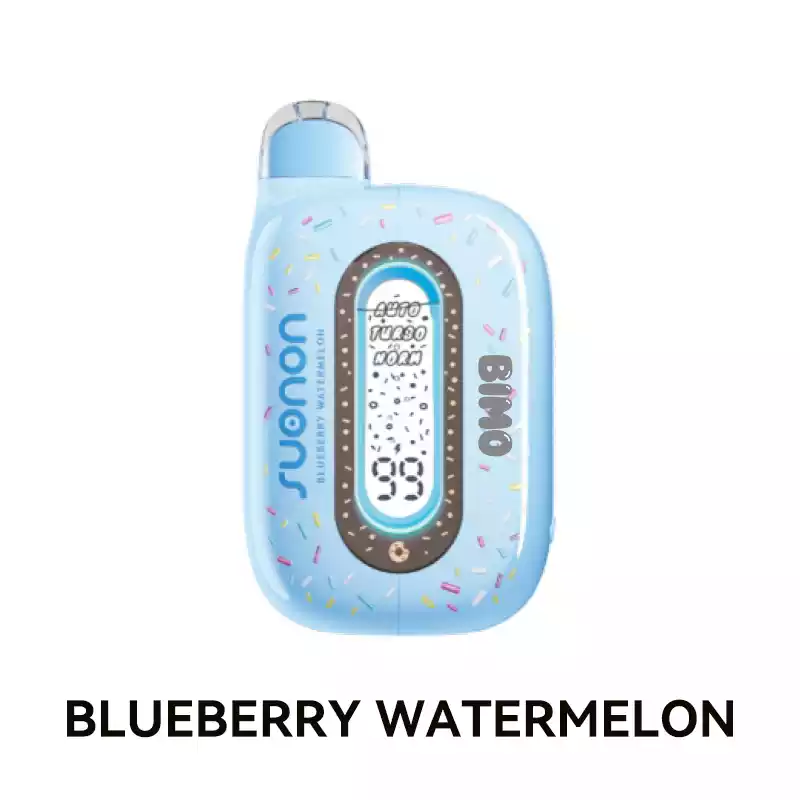
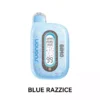
BIMO DONETE 50000 Blueberry Watermelon Disposable Vape Australia
Blueberry Watermelon is one of the few Profile names in this category that tells you almost nothing useful, and it is worth explaining why before you spend a dollar on it. The reason is not that the name is wrong. It is that both halves of this name are fruits whose colour is doing most of the work in your head, and neither of those colours exists in the fill you are about to inhale.
The BIMO DONETE 50000 Blueberry Watermelon is a rechargeable disposable rated at up to 50000 puffs in its standard output mode, with a 900mAh built-in battery, a 0.5 ohm dual mesh coil, a Dual-Clear display, adjustable airflow and a postless body. It is one of 15 options in the DONETE range, and it is priced at the top of the line rather than the bottom. This page covers what the two fruits actually contribute to a blend, and the one thing about this pairing that most buyers get backwards.
Neither of these tastes is really about a colour
Blueberries are blue because of pigments sitting in the skin. Watermelon flesh is pink because of a different pigment family entirely, in a fruit that shares nothing with a blueberry botanically. The two colours are unrelated, they come from different chemistry, and neither of them has any bearing on what the fruit tastes or smells like. Colour in fruit is a signal for animals, not a component of taste.
That matters here because a vape fill has no colour of its own to speak of. The base blends are clear, and the aroma compounds that carry the taste are used in amounts far too small to tint anything. A blueberry and watermelon fill looks essentially the same as a mint fill or a tobac fill in the same device. Which means every colour-related assumption you might bring to this taste is being supplied by the name and by your memory of the fruit, not by anything in the product.
It is worth separating what each half of the name is actually doing, because they are not equivalent partners in the blend.
| Blueberry | Watermelon | |
|---|---|---|
| What it supplies | Sweetness, depth and most of the taste’s staying power | Lightness, a succulent middle and a clean finish |
| Acidity | Low. Blueberry is a soft fruit rather than a sharp one, so the sweetness arrives without much of a bite under it. | Very low. Watermelon is one of the least acidic fruits used in taste work, which is why it reads as watery rather than tangy. |
| Aroma strength | Delicate, and it sits close to the threshold where your nose stops registering it. It is easy to lose and easy to overdo. | Very potent at tiny amounts, but broad and soft rather than sharp. Present without being assertive. |
| Its job in this blend | The base. It is the fruit you taste when you think about the taste afterwards. | The lift. It is the fruit you taste most clearly in the first second of a draw. |
Both halves are low in acid, and that is the piece of information that actually predicts how this blend behaves. Acids are what give a fruit taste shape and a place to stop. Taste work leans on citrus for lift and on sharper berries for structure precisely because they supply that edge. Take the acid out of a blend and the sweetness has nothing to push against, so it spreads out and softens rather than concentrating.
In practice, that means Blueberry Watermelon on a device like this will read round and gentle rather than crisp. If you have found berry tastes too heavy, or candy tastes too much, this is the direction that usually suits. If you want a taste with a defined edge that snaps shut at the end of a draw, this is not going to give you that, and it is better to know now than after a fill.
The blueberry half is the fragile one, and the melon is why it survives
Blueberry is one of the harder fruits to reproduce well, and the reason is the same delicacy that makes a real blueberry taste good. The compounds responsible for the fruit’s actual character are light, soft and slightly floral, and they sit near the low end of what the nose can detect. Push a blueberry build and those delicate notes stop reading as fruit and start reading as something else entirely. Pull it back and the taste goes quiet and vague.
Watermelon does not have that problem. The handful of compounds behind melon aroma are extraordinarily effective at very small concentrations, so a melon note arrives reliably and holds its shape without needing to be pushed.
Put the two together and you get an arrangement that is more useful than it looks. The melon carries the opening of the draw, where a faint blueberry would otherwise be difficult to find. The blueberry sits underneath and does the longer work, giving the blend the sweetness and depth that watermelon on its own does not have. Watermelon by itself can come across as thin, because there is so little to it besides lightness. Blueberry by itself can come across as vague if the delicate top notes are not handled carefully. Each one covers the other’s weak point, which is why the pairing shows up as often as it does.
The consequence for a buyer is about where in the draw each fruit lives. The melon is the part you notice first. The berry is the part that stays with you. Anyone who judges the taste on the opening second will describe it as watermelon-forward, and anyone who judges it on the aftertaste will describe it as blueberry-forward, and both are describing the same fill. That difference in where you place your attention is the honest reason descriptions of this option vary so much between shops.
Why there is no cold in this one
Nothing in the Blueberry Watermelon name points to a chilled build, and BIMO has not added one. That is worth stating plainly, because the two fruits in this blend have very different histories with cooling.
Watermelon and cold are paired so routinely that many buyers assume any watermelon taste will arrive chilled, and BIMO does make a separate Watermelon Ice in this same 15-Profile range for exactly that expectation. Blueberry behaves differently again. A berry note reads well against a cool finish, but coolness also suppresses sweetness, and a blend whose sweetness is already being diluted by a melon layer is a blend that has less to spare than a straight berry.
So what you get here is a clean, light finish with no cold layer on top of it. If you want the chill to be the point of the taste, the iced options in this range are the ones to look at. If you want a fruit taste you can run for a long session without it turning sharp, the absence of cooling in this one is a feature rather than an omission.
What the three output modes mean for a fruit blend like this
The DONETE range gives you a choice that most disposables do not: three output settings, selected on the device, that change how hard it runs. They trade puff count against draw intensity, and the rated figures are different for each one.
| Mode | Rated puff count | What changes in the draw |
|---|---|---|
| Norm | Up to 50000 | Runs most efficiently, so the fill lasts longest. Draws are the mildest of the three. |
| Auto | Roughly 30000 to 50000 | Balances output and longevity between the other two settings. |
| Turbo | Up to 30000 | Runs hardest, giving the fullest draw and the shortest lifespan. |
Two things about that table are worth spelling out, because they are where buyers get caught out. The first is that the headline 50000 figure belongs to Norm mode only. Running the device on Turbo is a genuine trade, not a free upgrade, and the rated count drops accordingly. The second is that these are rated figures rather than a countdown. The number of draws you actually get depends on how long each draw is, where the airflow is set, and which mode you are using, so read the ratings as a way of comparing the three settings against each other rather than as a promise about a specific total.
For a blend made of two soft, low-acid fruits, the mode choice matters more than it would on a sharp taste. A higher output pushes sweetness and body forward, which suits the blueberry half. A gentler setting keeps the melon’s light opening intact instead of flattening it. If you find the taste too soft on one setting, moving to a stronger one is a real option here in a way it is not on a fixed-output device.
Blueberry Watermelon specifications on the BIMO DONETE 50000
| Puff rating | Up to 50000 in Norm mode, 30000 to 50000 in Auto mode, up to 30000 in Turbo mode |
| Taste | Blueberry base with a light watermelon layer over it, no cooling added |
| Battery | Built-in 900mAh, rechargeable by Type-C |
| Coil | 0.5 ohm dual mesh |
| Output modes | Norm, Auto and Turbo, selected on the device |
| Display | Dual-Clear display showing device status |
| Airflow | Adjustable, from a tighter pull to a looser one |
| Activation | Draw activated, no buttons |
| Body | Postless design, 55.5 x 29.16 x 92.85 mm |
| Range | One of 15 options in the BIMO DONETE 50000 line |
Blueberry Watermelon questions buyers ask
Does it taste of two fruits clearly, or one blended thing?
It reads as one option with two halves rather than a fruit salad. The watermelon opens the draw and the blueberry takes over as it goes, so the change between them is the character of the blend. Both fruits are soft and low in acid, so there is no sharp line between the two the way there would be between a berry and a citrus.
Which fruit comes first?
The melon is usually the opening note and the berry sits behind it, which matches how the two are normally arranged in a blend. What you will find if you read around is that some listings describe it the other way. That is not a disagreement about the product so much as a difference in which part of the draw each taster pays attention to, since the two fruits occupy different moments in a single draw.
Is it an iced taste?
No. There is no Ice or Frozen marker in the name and nothing cold was added to the build. The impression of freshness comes from the watermelon’s own watery, low-acid character rather than from a cooling layer. This range also carries a separate Watermelon Ice if a chilled melon is what you are after.
How sweet is it?
Middling, leaning soft. Blueberry supplies most of the sugar, but watermelon dilutes a taste rather than adding to it, so the blend never turns syrupy or heavy. If you normally find berry tastes overwhelming after a few days, this arrangement is one of the more comfortable versions of a berry profile to run long term.
Do I need to charge it?
Yes, and this is one of the differences between the DONETE range and a sealed disposable. The battery is built in at 900mAh and recharges over Type-C, so the device is topped up rather than thrown away when the power runs down. The display shows the battery state so you can see where you are before it becomes an issue.
Can I order a single unit?
Yes. SmokeOZ supplies one device at a time with no minimum order, so a full fill of a two-fruit blend can be tried for the price of one unit rather than a box. That matters more than usual on a device with this much capacity, because you are committing to a long run once it is open.
Buy disposable vapes in Australia
Blueberry Watermelon on the BIMO DONETE 50000 is a reminder that a Profile name carries more colour than the product does. Blueberry and watermelon come from entirely different pigment chemistry, and a vape fill carries no pigment worth speaking of, so every visual assumption about this blend is coming from the name rather than from the fill. What decides the experience instead is that both fruits are low in acid, which is why this reads round and soft rather than crisp, and that the delicate blueberry sits under a melon note that is strong enough to carry the opening. SmokeOZ sets out what each half of a Profile name is doing and where in the draw it shows up, rather than leaving you to infer it from the label, and keeps the device detail beside it, including the puff rating by mode, the battery, the coil, the display and the airflow. BIMO, IGET, ALIBARBAR, PICCO and ARVO are grouped in one catalogue so the fruit blends across the range can be compared together, one device is a normal order with no minimum, and the price on the page is what you pay.
Why SmokeOZ?
Two-fruit blends are the tastes buyers most often get wrong, because a name like Blueberry Watermelon says nothing about which fruit leads, how sweet the result is, or whether the finish is cold. Listings here answer those questions before the order rather than after the first fill, and pair a taste description with the settings a device like this offers, so the output and the airflow can be matched to the fruit rather than guessed at. Devices are held in an Australian warehouse and dispatched locally, ordering one unit on its own is entirely normal, and everything you need to judge a taste sits alongside the price.