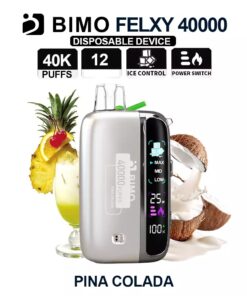


BIMO Felxy 40000 Puffs Pomegranate Raspberry Disposable Vape Australia
Most Profile names in this range describe what you will taste. This one describes what you will miss. Eating a pomegranate is mostly a physical act, a few hundred small wet bursts in a row, each one flooding your mouth with sweet nectar and then pulling back into a dry pinch, and then doing it again. That alternation is the whole experience. It arrives through texture rather than through taste, and texture is the one thing a vape cannot reproduce at any wattage on any setting. This page is about what that means for this blend, why the raspberry is doing more work than its half of the name suggests, and what the controls on the base actually change.
Two hardware points first. This is a rechargeable base that accepts magnetic pre-filled pods, so it takes a Type-C cable in a way a sealed device never would, and it carries a four-position ice control, a three-position power control and an airflow adjustment. This listing is the Kit, which is the base plus one Pomegranate Raspberry pod. A pod sold on its own contains no battery or electronics and will not run without the base, so if you have not bought this platform before, this is the listing that works.
The part of a pomegranate you actually eat is not the whole fruit
A pomegranate is a layered thing and the layers disagree with each other. On the outside there is a tough leathery rind that nobody eats. Inside that sits a bitter, pale layer that runs between the chambers and is definitely not the good part. And hanging inside all of that, packed in compartments, are the arils, which are the part everybody wants.
That matters because the sweet and the dry are not in the same place. The arils are sweet and succulent and carry the fruit’s acidity with them. The pale layer between the compartments is where the dryness lives, and it is where the astringency comes from. A pomegranate is sweet and sharp and dry at once, and those three things are sitting in different parts of the same fruit.
Now take the physical part away and something important disappears. Eating a pomegranate is not primarily about aroma. It is about a sequence of small soft explosions, each one arriving separately, each one followed by its own dry finish. That is a texture experience, and it is the reason pomegranate feels like nothing else even when the taste is familiar.
A vape has no texture layer. There is no way to make a draw feel like a hundred separate soft bursts. What can be delivered is aroma, acidity, sweetness, temperature and density, and those are the only levers available. So a pomegranate vape is not a reduced version of the fruit. It is a different thing built from the parts that survive the trip, and it will read closer to a sweet and sharp drink than to a pomegranate, no matter how it is adjusted.
Which means the raspberry is not the second fruit, it is the workaround
This is the part of the blend that is easy to read the wrong way. The natural assumption is that a two-fruit name means two fruits sitting next to each other, one bringing sweetness and one bringing sharpness, and that the balance between them is the thing to judge. That is not how this one is built.
Think about what the raspberry half contributes. Its aroma is mobile, floral and fruity, and it arrives in waves rather than sitting still. That is a description of something that changes within a draw, which is exactly the quality the pomegranate is missing. The pomegranate half of this blend brings what it is genuinely good at, which is depth, acidity and a dry finish. The raspberry half brings movement, and it is bringing that movement in order to stand in for a sequence of bursts that the format cannot deliver.
So the useful way to read this profile is not pomegranate plus raspberry. It is a solid, dry, acidic fruit note with a moving top note layered over it to keep it from sitting flat in one mouthful. If you are looking for a pomegranate that recreates the fruit, that is not what any setting here will produce. If you want something rich, sharp and dry at the back with a bright fruit note that moves over the top, this blend is built precisely for that.
There is a second consequence of the same fact, and it applies late in a pod. Aroma leaves steadily from the moment a pod opens, while the sense of sharpness and dryness does not fade on the same schedule, because those are not delivered by the same thing. So as a pod works down, this profile tilts. It does not simply get weaker. It becomes more about the dry, sharp, acidic part and less about the moving fruit note on top, which is the opposite of what happens to a blend where the heavier note is doing the structural work.
That also means the opening draws of a fresh pod are the most complete reading of this blend, not because the device changes but because both halves are present at full strength at the start. If you want to know what this taste is, open a new pod and take a couple of long draws before deciding anything about it.
Nothing cold is built in, and dry profiles handle the dial differently
There is no cooling in this fill, so all of the cold on this profile comes from the four-position control on the base. That matters here because this is a dry blend, and dry blends are the least forgiving about added cold.
A cooling agent acts on perception rather than on temperature, and the two effects that matter are that added cool reads as extra freshness and that it shifts how sweetness and bitterness are registered, pushing a profile towards reading sweeter and less sharp. On a sweet blend that is a straightforward gain. On something carrying real dryness underneath, it works against the thing that makes it worth having, because the dryness is exactly what the cooling is flattening.
So the sequence reads like this. At ZERO you have the profile as built, with the dry finish fully audible behind the fruit. LOW takes some of the edge off and makes it cleaner. REGULAR reads sweeter and noticeably less dry, and the dry finish starts to become an afterthought rather than part of the taste. FROZEN turns it into something closer to a chilled sweet drink, which is a legitimate taste but is no longer the pomegranate experience anyone is looking for on this profile.
The useful advice is to stay low on this one, and to read the top of the dial as a different taste rather than a stronger version of this one. If the blend reads sharp on the lower settings, that sharpness is the blend doing its job rather than a fault to be dialled away. And if you do want a sweeter version of it, the middle positions give you that without taking the dryness out entirely, which the top of the dial does.
Power moves the two halves in opposite directions again
The Felxy runs a 1.1 ohm dual mesh coil at 15W, 20W and 25W, and on this blend that dial is a balance rather than an intensity control, for the same structural reason it is on the other two-part blends on this device.
The raspberry half is carried by volatile aroma that changes within a draw, and more vapour spreads those compounds across more air. The moving quality on top gets quieter as the wattage rises. That is not a defect, it is what a volatile note does in a larger volume of vapour.
The pomegranate half runs the other way, because dry depth is not delivered by a scarce compound but by the body of the blend itself, and body needs volume to register. More vapour gives the dry, sharp, acidic part more presence and more weight. So the top setting produces a deeper, fuller, more grown-up version of this profile with less of the bright fruit movement over the top of it, and the bottom setting produces a thinner, brighter, more obviously fruit-forward version with less of the dry finish.
Twenty is a sensible place to start and both ends are worth trying on the same pod, because they are genuinely different drinks. Fifteen watts is also the least fill per draw, so it is the setting that stretches a pod furthest, which matters more here than on most profiles given that the good part of this blend comes first.
Airflow has the last word and it points back towards the fruit. Opening the base gives the volatile raspberry compounds more room to register before they clear, which brings the movement forward and lifts the dry finish further back. Closing it concentrates everything into a smaller volume, which favours the dense dry half and makes the draw feel fuller and heavier. On a blend built on a contrast between something dry and something moving, that control is worth more than either of the other two.
Pomegranate Raspberry against the other profiles here
Fifteen profiles on this device, and this is one of the few built on dryness rather than sweetness or cold. Here is how the comparison works when you are choosing rather than replacing.
The comparison worth making is against the pure dark-fruit blends, since they are the other grown-up direction in this range. Those are built on a single heavy fruit family, so they are consistent from the first draw to the last and they do not need a second note to keep them interesting. That is a real advantage on a long pod. This blend is more interesting while it is fresh and less consistent later, and which of those two things matters more depends entirely on how quickly you like to get through a pod.
One honest limitation, and it is the same one that applies to anything in this range built on an unusual fruit. Pomegranate is not a fruit most people have a strong existing reference for, which means the taste will be judged against its label rather than against memory. If you have eaten a lot of pomegranates and expect a burst of sweetness and a chewing texture, this will not deliver that. If you want something sharp, grown-up and dry with real depth behind it, it is one of the better options on the platform.
Pomegranate Raspberry specifications on the BIMO Felxy 40000
That puff rating belongs to the platform and not to the pod in your hand, so its use is as a comparison point rather than a count on one fill. Your settings move the real figure, since long draws at 25W take more fill per puff than short ones at 15W. The screen reports battery and wattage rather than remaining fill, and on this blend the signal that a pod has tilted is in the taste itself: the fruit movement over the top becomes less obvious while the dry sharpness underneath carries the whole taste.
How to set this one up
Start at 15W, ice on ZERO, airflow open
Least vapour, no added cold, and the most spread out draw. All three of those push the moving fruit note forward and leave the dry finish audible, and on a blend built on that contrast this is the position where you can actually judge both halves rather than one drowning the other.
Keep the ice on the lower two positions
Added cold on a dry blend flattens the dryness before it improves anything, and the dryness is the reason this taste is worth buying. Low is enough if you want a little freshness. If the blend reads sharp on the bottom settings, that is the profile working rather than something to correct.
Go to 25W when you want the grown-up version
More vapour gives the dry, acidic half more weight and more depth, and lets the fruit note on top sit further back. It is a less sweet, more serious read of the same blend and worth tasting against the low setting on the same pod before you decide which one you want.
Close the airflow when the dry finish is disappearing
Opening the base helps the volatile fruit note and pushes the dense half back. If a pod is reading as thin and only a little sharp, closing the base concentrates the dry body and gives the blend something to sit on. This is the one control on the profile that works against the other two.
Judge it on a fresh pod rather than late in one
Both halves are present at full strength at the start, and this profile tilts as it empties rather than fading evenly. A first impression from a newly opened pod is the honest reading of the blend. One from the end of a pod is mostly a reading of how much is left.
Pomegranate Raspberry questions buyers ask
Will this taste like eating a pomegranate?
Not quite, and no setting will change that. Eating a pomegranate is mostly a physical experience, a long sequence of small soft bursts, and there is no texture layer in a vape to reproduce that. What you get here is the part of the fruit that travels, which is acidity, sweetness and a dry finish, with a moving fruit note over the top to keep it from sitting flat.
Why is the raspberry doing so much work?
Because the pomegranate half cannot move on its own. Its note is deep, dry and steady, which is exactly what holds a blend together and also what makes it flat if nothing else is happening. The raspberry aroma changes within a draw, so it supplies the sequence of attention that the pomegranate cannot, and the pair reads as one profile rather than two fruits sharing a pod.
Is it sweet or is it dry?
Both, in that order. The sweetness and sharpness arrive first and the dry finish is what is left behind, which is the same order a real pomegranate works in. If you prefer tastes that stay sweet all the way down, this will read as drier than you expect and the sweet fruit directions in this range will suit you better.
Is there cooling in it?
None is built into the fill, so all of the cold comes from the dial on the base. On a dry profile that is worth knowing before you start, because added cold takes the edge off the dryness that this taste is built on. Stay low and you get freshness without losing the part that makes it interesting.
How long will a pod last?
It comes down to how you run it rather than to anything printed on the box. Forty thousand is the platform figure, not a single pod, and a long slow draw at 25W moves noticeably more fill than a short one at 15W. The screen shows battery and wattage rather than remaining fill, so the signal is in the taste: the fruit note over the top becoming less obvious while the dry sharpness carries everything.
Can I order just the pod?
A pod is cheaper than a Kit and can be ordered on its own, but there is nothing powered inside it. Both cells, the connector, the readout and every control sit in the base, which means it is only worth buying once you have that base. If this is your first order here, it needs to be the Kit.
Buy disposable vapes in Australia
Pomegranate Raspberry is a good illustration of why a two-fruit name does not always mean two fruits side by side. The pomegranate half brings depth, acidity and a dry finish, and the raspberry half brings the movement that the format cannot supply on its own, so the blend is best read as one profile with a contrast inside it rather than as a pairing to be balanced. On the hardware, the ice control and the wattage both cost you the dryness, while the airflow is the one control that brings the fruit back forward. Listings here describe what each taste is built from, what each control actually changes about it, how the profile behaves as a pod empties, and whether the listing includes the hardware needed to run it. IGET, BIMO, ALIBARBAR, PICCO and ARVO are all listed together so profiles across device types can be compared on one page, stock is held and shipped inside Australia, and a single unit is a normal order with no minimum.
Why SmokeOZ?
Taste descriptions usually tell you what something is meant to taste like, which is not the same as telling you what you will get or how to get the most out of it. Every page here takes the second approach. It explains what each half of a blend is contributing, which control moves which half, where the point of diminishing return sits on each dial, and how the profile changes as the pod empties, so you can find the right setting on the first pod instead of buying several. Stock is held in an Australian warehouse and dispatched from there, one unit is an ordinary order rather than a bulk commitment, and the full specification sits on the same page as the price.