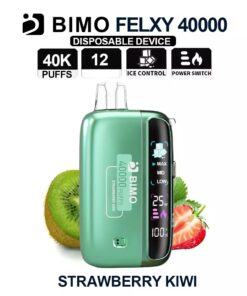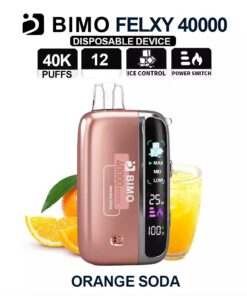
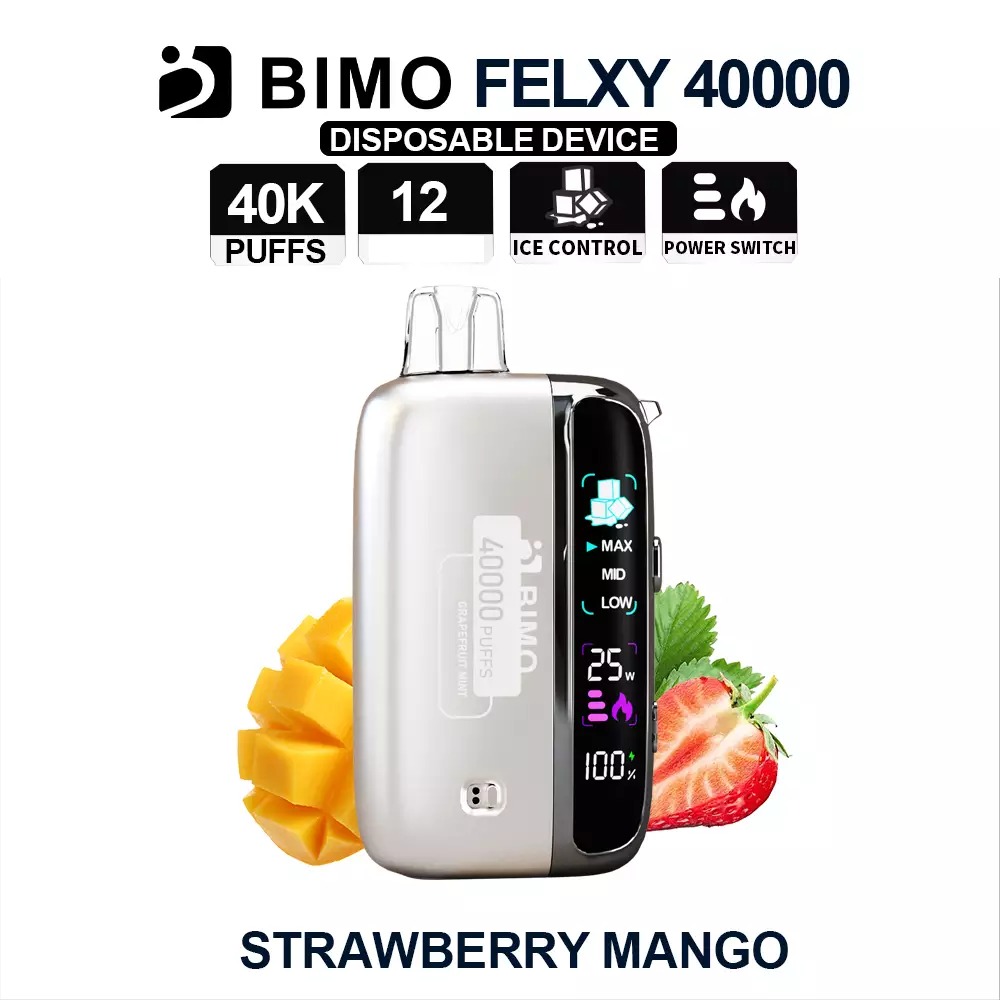

BIMO Felxy 40000 Puffs Strawberry Mango Disposable Vape Australia
Most two-fruit blends are assembled rather than found. One fruit supplies the sweet, the other supplies the sharp or the lift, and the name simply tells you the two are sharing a pod. Strawberry Mango is not built that way, and understanding why changes what the settings on this device do to it. These two fruits share a compound that is largely responsible for the sweet part of both of their aromas. They overlap. That is unusual, it is the reason this blend is more coherent than most of its neighbours, and it is also the reason it can read as one fruit rather than two unless you set the device up to keep them apart.
Two hardware points first. This is a rechargeable base that accepts magnetic pre-filled pods, so it takes a Type-C cable in a way a sealed single-piece device never would, and it carries a four-position ice control, a three-position power control and an airflow adjustment. This listing is the Kit, which is the base plus one Strawberry Mango pod. A pod ordered on its own contains nothing powered and will not run without the base, so if this is your first purchase on the platform, this is the listing that works.
Mango and strawberry share the compound that makes them sweet
A ripe mango gives off an enormous number of volatile compounds. Analysis has counted well over two hundred of them, and the number of varieties is large enough that a single list would not be much use. What matters is which handful of them are actually doing the work, because the answer is not the one most people would guess.
Terpenes are the most abundant volatiles coming off a mango by sheer volume, and they are also the source of its pine and resin character, the smell people pick up from the stem end and from unripe peel. But abundance is not influence. The compounds doing the actual identifying are esters, and the sweet note in particular is carried by a furanone, a small ring-shaped sugar-derived molecule that gives mango a rounded, candy-like sweetness rather than a sharp one.
Here is the part that matters for this blend. That same furanone is also present in strawberry, and it is one of the compounds responsible for the soft sweet part of a strawberry’s aroma rather than its floweriness. Mango and strawberry are different fruits from different families that grow in completely different places, and they arrived at the same sweet note by way of the same molecule.
Which means the two halves of this blend are not sitting side by side. They share a component. When you taste them together you are partly tasting one note twice, and that is why this combination tends to taste rounder and more unified than a typical two-fruit profile, and why it can go syrupy faster than either fruit on its own would.
There is a second overlap worth knowing about. Mango also contains a lactone compound that is widely associated with a coconut note, in the same way that certain other soft fruits carry it. A coconut impression is therefore part of what a well-built mango smells like, which is not obvious from the name and is worth having in mind if you are trying to work out why a mango profile on this device sometimes has something creamy sitting under it.
The shared note is also a warm one, which is what the wattage does
Now the part that connects this to the hardware, and it is the most useful thing on the page. That shared furanone sits in the same broad family as the caramelising and cooked-sugar compounds that show up when fruit is heated. It is not the same as a thermal product, but it behaves the same way: it is more prominent when things are warmer and more of it reaches you at a higher setting.
So the wattage control on this blend does not simply make things stronger. It controls how fused the two halves are. At the lower setting, less of that shared note comes forward, and because the strawberry and the mango also have plenty of material that does not overlap, you get them as two distinct fruit rather than one blended mass. At the higher setting, the shared note rises and pulls the two towards each other, and the taste consolidates into a single sweet tropical roundness that is very pleasant but is no longer two fruits.
That gives you a genuinely useful way to decide what you want. If this blend tastes to you like one fruit having swallowed the other, or like a single sweet rather than a pairing, the wattage is the control that caused it and lowering the wattage is the fix. If it tastes a bit too separated and you want something more unified and rounder, turning it up is how you get there. Nobody describes that behaviour when they describe these two-fruit blends, because in most of them the two halves do not share anything, so a hotter coil simply makes both louder.
Higher power also brings more body overall, so the profile is fuller and slightly heavier at 25W, and it uses more fill per draw than the low setting does. Fifteen watts is the setting for maximum separation between the two fruits and the gentlest on fill.
There is no cooling in the fill, and on a sweet blend that is an advantage
Nothing cold is built into this profile, so all of the cold comes from the four-position control on the base. On a sweet tropical blend that is mostly a gain, because a cooling agent suppresses perceived sweetness and this profile is already carrying a lot of it.
The positions run from clean and warm at ZERO, where you get the pure blend with nothing added, through the lower middle positions where the profile starts to read as a chilled fruit drink and the sweetness sits back a little, to the top of the dial where the taste is genuinely cold and noticeably less sugary than the same pod on the bottom setting. On most of the darker and drier profiles in this range, the cold costs something. Here it mostly buys something.
There is one caution. Because the shared note between these two fruits is on the sweet side, raising both the ice and the wattage at the same time doubles up on the same direction. You will get a cold, very sweet, very unified profile, and the two fruits will be further from separate than ever. If you are trying to hear strawberry and mango as two things, pick one dial to push and hold the other down.
Airflow has the last word, and it points in the opposite direction to both of the others. Opening the base spreads the vapour, which lets the material that does not overlap between the two fruits register separately. That is how you hear them as two fruits rather than one. Closing it concentrates everything into a denser, rounder, more unified taste. On a blend whose whole character comes from an overlap, this is the control that decides whether you are tasting a pairing or a single fruit.
How this one behaves as the pod empties
Strawberry Mango is one of the few profiles on this platform where the fruit behind the blend does improve as it goes, and that changes how you should pace it.
Mango is a climacteric fruit. That means it keeps developing after it has been picked, softening and sweetening over a period of days rather than hours, driven by a gas the fruit produces itself. Strawberry is on the same side of that line. So unlike the citrus and the berries in this range, both halves of this blend have a middle, and both of them are still moving towards it while the pod is open.
In practice that means the taste consolidates. The two halves move towards each other over the course of a pod rather than separating, and by the later part of a fill this reads as a rounder and more unified sweet tropical than it did on day one. That is the opposite of the sharper, greener profiles in this range, which thin out and change character as they empty.
So the useful ordering on this device runs the other way from the citrus and the berries. This one is worth saving for later in a pod, and if you want the two fruits clearly separate, take it while the pod is fresh, because you will not get that separation back once they have converged.
Strawberry Mango against the other profiles here
Fifteen profiles on this device, and the comparison worth making is against the other two-fruit blends rather than against the single fruits, because that is where this one sits.
The comparison that matters most is against the genuine two-fruit blends, because they are the ones people choose between. In those, the two halves share nothing, so turning the power up simply makes both of them louder while they stay separate. Here the two halves already have something in common, so the same dial quietly merges them. That is the trade you are making here: a rounder, more unified and more reliable taste, in exchange for the two fruits losing their edges.
One honest limitation. Because the shared note is sweet and warms up with power, there is no setting on this device that gives you a sharp mango and a bright strawberry at the same time. This is a sweet profile and it stays sweet. If you want something with a real acidic edge or a dry finish, the sharper directions in this range will serve you better and will not need a lower setting to stay interesting.
Strawberry Mango specifications on the BIMO Felxy 40000
The forty thousand figure is the platform rating rather than a description of the pod in your hand, so its use is as a comparison point against other devices rather than as a count on one fill. Your settings move the real figure too, since long slow draws at 25W use more fill per puff than short ones at 15W. The screen reports battery and wattage rather than remaining fill, so on this blend the signal that a pod has moved on is that the taste reads as one fruit rather than two and has got rounder along the way.
Where to set it, and when
Start at 15W with the dial on ZERO and the airflow open
Least vapour, no added cold, and the most spread out draw. All three of those keep the two halves apart, and on a blend that can genuinely fuse, that is the position where you can hear strawberry and mango as two things rather than one sweet tropical taste.
Turn the power up when you want one fruit instead of two
This is the one profile on the device where raising the wattage changes the character rather than the strength. Twenty-five watts brings the shared sweet note forward and merges the two fruits into a rounder, more unified and more reliable taste. It is the better setting for an all-day draw and the wrong one for judging whether the two halves are actually there.
Use the ice to take sweetness off rather than to add cold
Cooling suppresses how sweet something tastes, and this profile is already carrying a shared sweet note from both fruits. That makes the dial useful here in a way it is not on the dry profiles, where it mostly takes something away. Low and middle positions give a cleaner chilled fruit read without flattening it.
Pick one dial to push rather than both
Ice and wattage both drive this blend towards sweet and towards unity. Raising them together gets you a cold, very sweet, single-infused taste in one move. If the two fruits matter to you, hold one of them down and use the other.
Save this one for later in the pod, unlike the sharper profiles
Both fruits in this blend keep developing after picking, so the taste consolidates rather than thinning out. Enjoy it fresh if you want to hear the two halves, and later in the pod if you want the rounder, more unified version it becomes.
Strawberry Mango questions buyers ask
Does it actually taste like two different fruits?
Sometimes, and it depends on the setting rather than on the product. These two fruits share a compound that carries a lot of the sweet part of both their aromas, so they can genuinely merge into a single round taste. On the lower settings with the airflow open you will hear them separately. Turn the power up and they become one option.
Is it sweet?
Yes, and more so than the name suggests, because the sweet note is coming from both halves rather than from one of them. There is no acidic edge and no dry finish here. The ice control is genuinely useful on this profile for that reason, since cooling takes the edge off the sweetness rather than fighting against it.
Why does it taste different later in the pod?
Because both of these fruits carry on developing after they are picked, which puts them on the other side of that line from citrus and berries. The two halves converge as the pod empties, so the later part of a fill tastes rounder and more unified than the first. That is normal here rather than a sign of the pod going off.
Is there any cooling in it?
None in the fill, so all of the cold comes from the base and you can set it to nothing at all. On a sweet tropical blend that is a useful thing to have rather than a compromise, because the dial takes the sugary edge off as it rises instead of making the profile harsher.
Which wattage should I use?
Fifteen watts if you want to hear strawberry and mango as two separate fruits, twenty-five if you want the rounder unified version and do not mind the separation disappearing. Twenty is a reasonable middle. Unlike most fruit on this device, this is a dial worth experimenting with because it changes what the blend is rather than how much of it you get.
Can I order just the pod?
A pod costs less than a Kit and can be bought on its own, but there is no battery or electronics inside one. The cells, the connector, the readout and every control are all part of the base, so a pod is only worth ordering once you have that base. If you have no base yet, this is the purchase that includes one.
Buy disposable vapes in Australia
Strawberry Mango is the profile on this platform where the power control does something nobody expects, and it is worth understanding before you buy. Because the two fruits share a compound that carries the sweet part of both aromas, turning the wattage up does not just make the taste louder, it merges the two halves into one rounded taste. That makes this a forgiving profile to run hot and a poor one to judge at high power if what you wanted was two distinct fruits. Listings here describe what each taste is built from, what each control changes about it specifically, how the profile shifts as the pod empties, and whether the listing includes the hardware needed to run it. IGET, BIMO, ALIBARBAR, PICCO and ARVO are all kept in one catalogue so profiles across device types can be compared side by side, stock is held and shipped inside Australia, and a single unit is a normal order with no minimum.
Why SmokeOZ?
Every option on a device with this many dials behaves differently under them, so a number of settings tells you nothing on its own. Each page here says what the dial does to that particular fill, including the cases where turning something up quietly changes the taste rather than strengthening it, and covers what is built into the pod versus what you control. You can find the right setting on the first pod instead of buying your way to it. Stock is held in an Australian warehouse and dispatched from there, one unit is an ordinary order rather than a bulk commitment, and the full specification sits alongside the price.