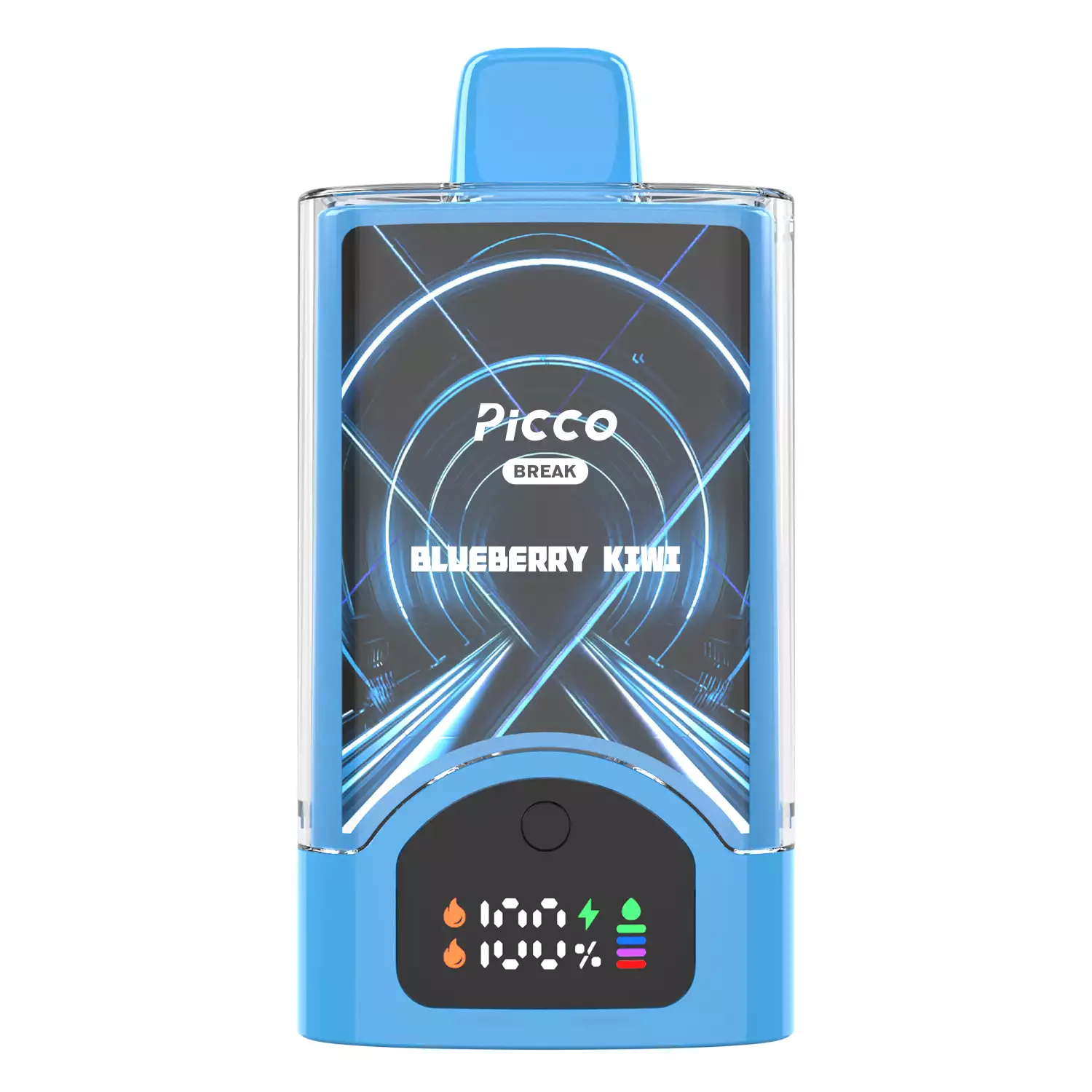
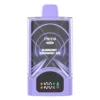
PICCO Break 30000 Puffs Disposable Vape Blueberry Kiwi
Blueberry Kiwi puts the quietest berry note in vaping next to one of the sharpest green fruits, and the pairing is better understood as a repair than as a taste match. Blueberry has a specific weakness and kiwi has a specific way of covering it. What makes this blend worth thinking about is that the repair kiwi performs is not the one most berry blends use.
What follows covers what goes wrong with a plain blueberry, how kiwi addresses it differently from a red fruit, what that means for the shape of a draw, and where the adjustable output on this device is best left sitting.
The Hardware Behind This Blend
| Item | Detail |
|---|---|
| Draw count | Up to 30000 in Norm, nearer 20000 once Boost is engaged |
| Prefill | 25 ml sealed inside the body, with no refill port |
| Power cell | 1300 mAh internal, topped up through a Type-C socket |
| In the box | Device only, so a Type-C lead is worth having ready |
| Wattage | Adjustable across 20 W to 35 W |
| Heating | Quad mesh running at 0.3 to 0.6 ohm |
| Cores | Dual or Quad Ceramic Core, chosen with three button presses |
| Display | Charge and fill readouts together on one screen |
What Blueberry Needs and What Kiwi Gives It
Blueberry is the fruit that gives taste makers the most trouble, and the reason is structural rather than a matter of taste.
The Problem With Blueberry
A blueberry note carries very little acidity and no single compound that defines it. Its identity sits in a small cluster of delicate aromas that a nose reads as much floral as fruity, and that cluster sits close to the point where the nose stops registering anything at all.
That leaves a narrow window. Understate it and there is nothing there to recognise; push it and the floral side takes over and the profile stops reading as fruit. This is why blueberry tastes divide buyers so sharply and why the fruit almost always turns up alongside something that can hold its edge.
Why Kiwi Is a Different Fix From Raspberry
The usual partner for blueberry is a red berry, and the reason it works is volume. Raspberry registers at extremely low concentrations, which makes it the loudest berry note available, so a small amount of it lifts a faint blueberry into something with real presence. The cost is that the blend stops being about blueberry and starts being about red fruit.
Kiwi works on a different principle. Its sharpness arrives through a green aroma rather than through acidity, so what it contributes is a direction rather than a volume. Drop it in behind a soft blueberry and the berry is still the subject of the puff, while the finish gains a crisp green snap and nothing gains any sourness along the way.
Two partners, two different repairs
Blueberry carries almost no acid and no signature compound, so its identity rests on a cluster of delicate aromas rather than on anything sturdy.
Kiwi’s sharpness comes from its aroma rather than from acid, which is why it can add a crisp edge without adding sourness.
Raspberry would fix a faint berry by adding volume. Kiwi fixes it by adding direction, which leaves the berry itself intact.
Kiwi Keeps Blueberry Soft and That Is the Whole Point
Put plainly, this blend does something most blueberry pairings cannot. A soft fruit note normally has to be either left soft and a little indistinct, or sharpened by something acidic that changes its character. Kiwi lets the blueberry stay soft and still gives the puff an ending.
That shape is easy to describe once you have it in front of you. The opening of a draw is rounded and gentle, the middle stays soft and faintly sweet, and the close arrives green and crisp with no tartness underneath it. What a buyer should listen for is whether that middle stays soft. If the profile turns sharp partway through a puff, the kiwi is sitting too far forward and the balance has been set wrong.
It also means this is one of the few two fruit blends in the range where neither fruit is competing to be the headline. There is no loud note and no quiet note being propped up by it. There is a soft fruit and a crisp edge, and the blend is the relationship between them.
Where the Adjustment Range Sits on a Faint Fruit
The Break offers an adjustable output between 20 W and 35 W, plus a Dual and a Quad Ceramic Core mode chosen with a triple press. On most tastes all of that is about emphasis, letting a buyer choose how much force to put behind the taste. On this one it works more like protection.
A delicate aroma is the first thing that heat disturbs. Raise the output far enough and the same note that reads soft at lower wattage starts drifting toward its floral edge, which is the failure direction blueberry is known for. So the sensible way to run this blend is at the lower end, around 20 W to 22 W with the Dual Core mode engaged, and to regard the upper half of the range as something worth trying once rather than a default.
Quad Core sits on top of whatever the wattage is set to and adds vapour rather than changing the balance, so it is a way to get a fuller draw at the same setting. What it is not is a way to find more blueberry. A faint fruit does not become louder because more vapour passes over it, and a buyer chasing a bigger blueberry should be looking at the blueberry and raspberry option in this range instead.
A 25 ml Fill and the Two Readouts
The reservoir holds 25 ml, which is a substantial amount of one blend, and it will outlast a single charge of the 1300 mAh cell. That means the device needs a Type-C cable at some point, and the cable is not included, so it is worth having one before the battery readout starts dropping rather than after.
On a faint fruit blend the reservoir readout earns its place more than usual. Blueberry is the note most likely to turn vague as a coil ages, so a buyer noticing the berry going quiet should check the screen before concluding anything about the taste. Often the answer is a fill that is nearly finished rather than a blend that has stopped working, and the two figures on the display tell them apart.
Where Blueberry Kiwi Sits in the PICCO Break 30000 Range
This is the softest blend in a line that otherwise runs from citrus through green fruit to a tobac reading. The cards below cover the alternatives a buyer is most likely to be choosing between.
| Taste | How it is built | Who tends to want it |
|---|---|---|
| Blueberry Kiwi (this blend) | A soft, rounded berry with a green crisp snap at the close and no sourness. | A buyer who wants blueberry kept soft but with a defined ending. |
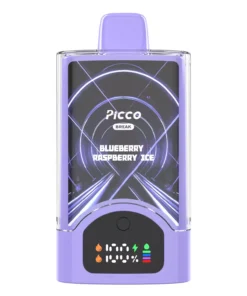
| Blueberry Raspberry Ice | The same berry opened up by a louder red fruit, with a cold layer over it. | When the blueberry should be made bigger rather than merely tidier. |
| Aloe Grape | A sweet grape held in check by a green plant note and no fruit acidity. | If you want the green note working on a sweet fruit instead of a faint one. |
| Blackberry Ice | A deep, faintly drying dark berry with a cold layer across the finish. | When the fruit you want is heavier and drier than blueberry can be. |
| Pink Lemon | A bright citrus blend that is tart from the first moment of the draw. | When the sharpness should run right through the puff, not just close it. |
Questions About the PICCO Break 30000 Blueberry Kiwi
How does kiwi differ from raspberry as a partner for blueberry?
They solve the same problem in opposite ways. Raspberry is the loudest berry there is, so adding it makes a blueberry blend bigger and pushes the profile toward red fruit. Kiwi is not loud, but its sharpness comes from a green aroma rather than from acidity, so it gives the blend a crisp edge without lending it any sourness. The blueberry stays soft in one case and gets swept up in the other.
Is this a sweet blend?
Mildly, and less than most fruit pairings in this range. Blueberry brings very little sugar and kiwi brings almost none, so the sweetness here is gentle rather than forward. Nothing has been added to push it toward a candy reading, and there is no cold layer either to sharpen it up.
Which setting should I start at?
The lower end of the range, around 20 W to 22 W on the Dual Ceramic Core mode. Blueberry is the most dose sensitive fruit note there is, and heat is what pushes it from soft and rounded toward floral. Starting low keeps the berry readable, and there is room to move up once you know how the blend behaves on your own draw.
Is there any cooling in Blueberry Kiwi?
None. The name carries two fruits and nothing about temperature, so no cold layer has been added. The crispness you feel at the end of a puff is the kiwi note rather than a cooling agent, which is a different sensation even though the two are often described with the same words.
Does this device need a charging cable?
Yes. The Break recharges over Type-C and the lead is not supplied with it, so a 25 ml fill will certainly outlast the first charge. Any standard Type-C cable works, and the battery readout on the screen shows when one is needed rather than leaving it to guesswork.
Buy disposable vapes in Australia
Blueberry is the fruit that most often ends up in a blend rather than on its own, and knowing why is the whole decision here. It is faint, it has no acidity, and the usual fix is a loud red fruit that takes over the profile. This one uses a green fruit instead, which leaves the blueberry soft and gives the puff a crisp ending without any sourness in it.
Why SmokeOZ?
Two blends can share a fruit and behave nothing alike, because the partner fruit decides whether that note is supported or swamped. A name rarely says which.
Every blend here is described by how it is put together rather than by its label, and the catalogue keeps one layout throughout, so a soft fruit pairing, a green fruit blend and a rechargeable pod kit can be compared side by side. IGET, BIMO, ALIBARBAR, PICCO and ARVO all appear in that catalogue.
There is no minimum order and no trade account to open, so a single device is a normal purchase. Stock lives in an Australian warehouse and ships from there, which makes the wait a domestic one, and the pricing stays low as a matter of course rather than as a campaign. A mature supply chain is what holds both of those in place.