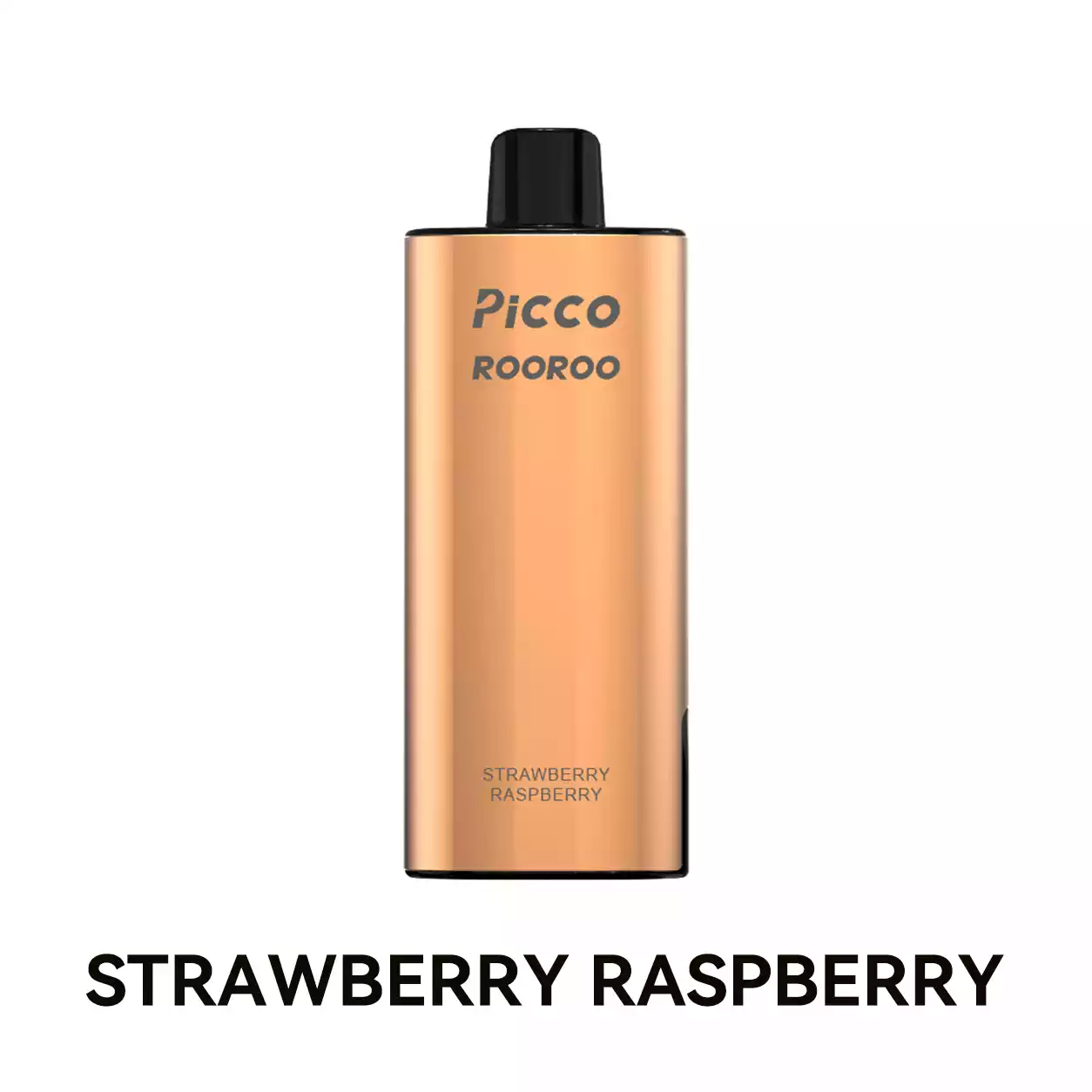


PICOO ROOROO 12000 Puffs Disposable Vape Strawberry Raspberry
This is the least eventful taste in the range and also the one most often misunderstood. It is not a weak blend or a thin one. It is two fruits placed close enough together in aroma that mixing them removes the very thing a blend is supposed to give you, which is the ability to taste two things.
What follows explains why some blends combine and others converge, why that difference matters when you are deciding what to order, and what a buyer can realistically expect from a flat profile on a device with nothing to adjust.
What This Device Provides Here
| Point | Detail |
|---|---|
| Puff rating | Up to 12000 puffs as supplied |
| Battery fitted | 2500 mAh, shipped ready to use |
| Recharge facility | Absent from the body |
| Readout | reservoir level and cell level on one strip |
| Chassis | Aluminium alloy, 99.96 g without fluid |
| Footprint | 40.10 mm wide by 102.40 mm tall |
| User settings | Nothing adjustable on this unit |
| Silent on | Fluid volume, coil type and coil resistance |
Two Fruits That Sit Too Close Together
The reasonable assumption when two fruits are named on a label is that you will taste two of them in some proportion. That holds when the two fruits are far apart. It fails when they are close, and the way it fails is worth understanding before ordering anything.
Strawberry and raspberry are close. Both are soft berries, both lean heavily on sweetness rather than on acid, and both draw their character from a shared category of aroma rather than from anything distinctive to one species. Put them together and the palate is not receiving two notes. It is receiving one note with two possible origins.
Why some blends converge rather than combine
Mixing two fruits does not always add something. When the two are far apart in aroma, the result carries both and reads as a blend. When they sit close together, the result carries neither in a way the palate can separate.
Strawberry and raspberry are close together. Both are soft red berries, both lean on sweetness, and both rely on a shared category of aroma rather than on anything distinctive to one of them.
That shared category is the problem in a practical sense. Once the two are mixed, a note of red fruit is a note of red fruit, and there is no step in the profile where the strawberry part can be pointed at and separated from the raspberry part.
So the honest description of this blend is a single soft red fruit note with two names attached to it, not two fruits in proportion.
This range does contain a pair of fruits that do combine rather than converge, and the comparison is instructive. Where two soft berries differ clearly in acid and tannin, the blend keeps a voice for each one and reads as a genuine mixture. Here there is no such difference to hold them apart, so the mixture collapses.
The result is that traceability is what a buyer loses, rather than balance. The profile is not lopsided or badly built. It simply cannot be traced back to either ingredient, at any point in the draw, because the two are not separable once mixed.
That has a direct buying consequence and it is the most useful sentence on this page. If you are buying this blend because you want strawberry, you should buy the plain strawberry option instead and accept a more single note result for it. If you are buying because you enjoy red fruit as a category and want something soft and uncomplicated, this is genuinely well suited and there is nothing wrong with it.
No Sharp Side and No Structural Support
There is a second thing missing from this pair, and it is the thing that most blends in this range use as a spine. Almost every other two fruit option here has at least one acidic fruit in it, and the acid is what gives the blend something to lean on. A sweet fruit against a sharp fruit has a direction to travel, and that direction is what makes a blend interesting to draw.
Neither strawberry nor raspberry brings meaningful acid. There is no sweet side and no sharp side in this profile, so the only variable left is how much sweetness sits against how much aroma. That is a real balance and it is not unpleasant, but it is a narrow one, and it does most of its work in the first few draws rather than over a whole fill.
The comparison with the sharper blends in this range makes the difference concrete. A profile built on dark berries and stone fruit can be dry, seedy, or sharp depending on the fruit, and a buyer can find a corner of it they like and stay there. This one offers fewer corners. Its whole character is soft, which is a fine thing to want and a poor thing to want twice the same way every day.
There is also a question about the cold finish on this profile. The ice word does real work on a sugar-heavy single fruit, and less work here, because there is less sugar in front for it to take and no loud aroma waiting underneath to be revealed. It will cool the vapor and it will thin the sweetness slightly. It will not turn a flat profile into one with a structure.
What Happens to the Balance Over a Long Fill
Most blends in this range change direction as they are used, because one half is more durable than the other and the profile tips toward whatever survives. This one is unusual in that both halves are quiet, so both fade at a similar rate.
The practical effect is that the profile narrows without tipping. Late in the fill it is a simpler red fruit note than it was on day one, but it is not a sharper one and it is not a sweeter one. A buyer who dislikes their profile usually dislikes it in the first few draws rather than discovering it slowly, which is worth knowing when a device is rated at 12000 puffs and will be lived with for weeks.
The hardware sets the pace. The cell is 2500 mAh and arrives at full charge, and there is no charging point on the body, so nothing needs topping up and nothing can be. The screen reports the reservoir remaining beside the charge remaining, and because the cell is not rechargeable, the fill figure is what decides when the device has finished. The body is aluminium alloy at 99.96 g empty, and at 102.40 mm tall it is a solid, long object in the hand rather than a slim one.
Why a Flat Profile Rewards a Variable Draw
On a profile with an edge in it, the draw is a way of reaching the edge. On a profile with no edge and no second fruit to alternate with, the draw is the only thing that varies the taste at all, which makes it more important rather than less.
Shorter, less frequent draws land more on the sweetness, which is the loudest thing here. Longer draws let the cold finish cover more of the palate, which thins the whole thing out and leaves a lighter, less sweet impression. Neither end is better, but a perfectly even draw through a flat profile is the one approach that gets a buyer nothing, because it averages away the only variable available.
Nothing else on the device is adjustable. There is no mode selector, no airflow control, no power setting and no charging socket, so the sweetness against aroma ratio was fixed before the unit was packed. Given how narrow that range is, keeping some variety in the draw is the single most useful habit a buyer can bring to this profile.
How This Blend Compares With the Others
Several berry pairs sit in this range, and they are built on different relationships between the two fruits rather than on different fruit names. The cards below set out what each pair actually does, which is the part a label cannot tell you.
| Option | What the two fruits do to each other | Buyer it suits |
|---|---|---|
| This option | Two close aromas that collapse into one red fruit note with no separate part. | A buyer who likes the red berry category but not any one fruit. |
| The blueberry and raspberry option | Two soft fruits that average into a smooth single voice, kept separable by their acid difference. | For a blended berry read where two fruits are still locatable. |
| The strawberry and kiwi option | A very sharp fruit beside a very quiet one, so acid leads and sweetness follows. | For structure and a clear edge rather than for softness. |
| The single strawberry option | One sugar-heavy fruit with the sweetness pulled back by cold. | For a single named fruit that can be judged on its own. |
| The three dark fruit option | Three names across two acid families, tasting dry and seedy. | For dryness and tannin, which this blend has none of. |
Choosing Strawberry Raspberry
Which of the two fruits will I actually taste?
Honestly, neither one on its own. The two aromas sit close enough that the blend reads as a single soft red fruit note, and once they are mixed there is no point in the profile where one of them can be picked out from the other. If you are buying this because you want strawberry specifically, buy the plain strawberry option. If you are buying it because you enjoy red fruit as a category and want something soft, this one is built for exactly that.
Is there any sharpness at all in this blend?
No, and that is the single biggest difference between this pair and most of the berry options in this range. Neither strawberry nor raspberry carries meaningful acid, so there is no sweet side and no sharp side. What is left is sweetness sitting against aroma, and that is a narrower range of experience than the two numbers suggest. A buyer who likes a note that cuts through a fruit should not expect this one to deliver it.
Is the ice word doing much here?
Less than it does elsewhere in the range, because there is less sugar in this profile for it to work on and no aroma loud enough to be revealed underneath. The cold finish will keep the vapor cool and it will thin the sweetness a little, which is worth having, but it does not turn a flat profile into a structured one. No herb is named in this profile, so anyone wanting a recognisable mint character should choose a product that says so.
Does the balance hold over a long fill?
Better than most blends here, and for an unusual reason. Both halves are quiet, so both fade at a similar rate, and a profile that loses both of its parts evenly does not tip in either direction. Expect it to become a slightly simpler red fruit note rather than a sharper or a sweeter one. On a sealed 2500 mAh device rated at 12000 puffs there is plenty of time for that to happen.
How should I draw this one?
Variably, because this is the profile where a steady draw gets you the least. There is no sharp note to draw out and no second fruit to alternate between, so the draw is the only thing that varies the taste at all. Shorter and slightly less frequent draws keep more of the sweetness; longer ones let more of the cold finish cover the palate and the profile thins out. Nothing on the device is adjustable, so this is the only control available.
Buy disposable vapes in Australia
This is a soft, uncomplicated red fruit profile and the honest case for it is exactly that. The two fruits sit too close together in aroma to be told apart once mixed, so anyone buying it for the strawberry specifically should take the plain strawberry option, and anyone buying it for the category will find it does that job without any sharpness anywhere in it. There is no acid in either fruit, so there is no structure to lean on and the balance will not change much over a long fill. Nothing on the device adjusts, which makes a variable draw the one thing worth varying here. Order single devices rather than committing to a case, because a flat profile is exactly the kind of thing that suits some buyers and bores others, and there is no way to know which side of that line you are on until it is in your hand.
Why SmokeOZ?
Knowing before you order that a blend of two close aromas cannot be separated, while a blend of two contrasting fruits can, is the difference between finding a taste and buying the same disappointment twice. Each page here is written against the device it belongs to, so a sealed 2500 mAh unit with no settings, no airflow and no charging point can be compared properly against a rechargeable model or a variable airflow one before any money changes hands.
IGET, BIMO, ALIBARBAR, PICCO and ARVO are all carried in the same catalogue, the names buyers in Australia actually search for, and every product is explained by what it is rather than by how it measures up against another product on the shelf.
One device is the smallest order there is, with nothing to register and no quantity to reach, which is the sensible way to test a profile like this one before going near a case. Australian stock is held locally and leaves an Australian warehouse, so the delivery never turns into an overseas wait, and the low pricing is how the store trades permanently rather than for a limited window.
See the PICOO ROOROO 12000 Puffs Strawberry Raspberry at SmokeOZ