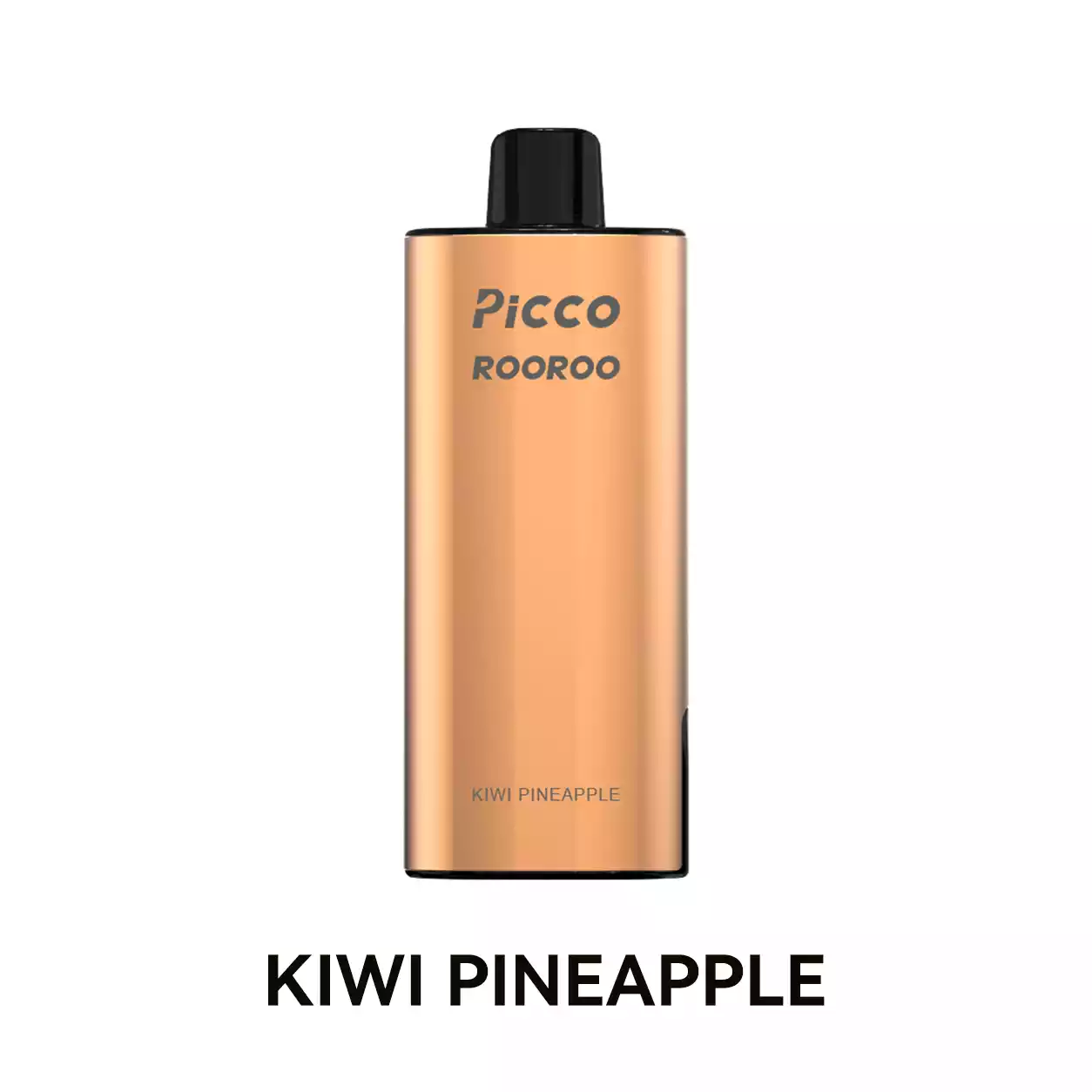
PICOO ROOROO 12000 Puffs Disposable Vape Kiwi Pineapple
Two tropical fruits, both of them sweet, and neither of them smelling anything like the other until you work out that they share the same molecule. That is the first thing worth understanding about this blend, and it changes what a buyer should expect from two names on a label.
There is a second thing as well, and it is the reason this particular two fruit blend works when a two soft berry blend in this same range does not. Acid is usually described as a sharpness that arrives, but where the acid sits inside a fruit changes how a blend reads. In a kiwi it sits right next to the aromatic tissue, so sharpness and scent arrive together.
This page covers the shared compound first, because it explains why the blend sounds like one fruit, then the acid position, which is what gives it a shape, and finally what happens when two notes built on the same molecule fail to separate. No fill volume or coil figure is stated here, because neither is published for this model.
What This Device Provides
| Attribute | Detail |
|---|---|
| Puff rating | 12000 puffs |
| Battery | 2500 mAh, charged in the factory, no access |
| Charging | Not possible, the body has no port |
| Screen | Remaining battery and remaining fill |
| Material | Aluminium alloy, 99.96 g with no fill in it |
| Footprint | Roughly 102 mm tall and 40 mm across |
| Adjustability | Nil |
| Undisclosed | fill volume, coil build and resistance |
Pineapple Shares Its Defining Aroma With Banana
There is an ester that does most of the work in both pineapple and banana. It is a small molecule, it is sweet smelling, and both fruits produce it in quantity. This is not a marketing resemblance or a vague family resemblance between the fruits. It is the same compound carrying the scent in each case.
Two fruits, one defining molecule
The scent people recognise in pineapple and the scent they recognise in banana are, to a large extent, the same molecule. It is an ester, and it is what gives both fruits their unmistakable sweet smell.
That is not a coincidence of naming. It is a real chemical overlap between two fruits that look nothing alike, which is why a blend built on both can behave like a single fruit rather than a conversation between two.
So a buyer who has already tried the banana option in this range has a rough idea of what this one smells like before reading a single word of the label.
The consequence for a buyer is quite practical. A pineapple and a banana are visually unrelated, they grow in different places, and they are not related at all as plants. Chemically, however, a large part of what each one smells like is the same molecule. A blend built on both of them therefore has two chances to produce that note and only one note to produce.
That is why this option sits closer to the banana profile elsewhere in this range than its two-fruit label suggests. A buyer who already has the banana option will recognise this immediately and should not read that similarity as a fault. A buyer choosing between the two should do it on the basis of acid and of how much cold finish they want, not on the assumption that two tropical fruits will sound like two separate things.
Where the Acid Sits Changes How a Blend Reads
Acid is normally described as a sharpness, and sharpness is normally described as arriving at some point in a draw. Where the acid sits in the fruit decides when that point is, and with two fruits in a blend the two positions may not agree.
A pineapple carries its acid through the flesh, fairly evenly distributed, so its sharpness arrives as part of the fruit rather than as a separate event. It is there from the front of the draw and it does not develop.
A kiwi is different, and this is the interesting part. The aromatic tissue in a kiwi sits at the centre, and that is also where the acid is concentrated. So in a kiwi the sharpness and the scent are not separate events that happen one after the other. They arrive together, in the middle of the fruit, and they arrive with each other.
Put those two positions together and the blend gets a shape it would not otherwise have. There is a fruit that establishes sweetness at the front, and there is a note that brings scent and sharpness together behind it. That is a front and a middle, which is the minimum a blend needs to be a blend rather than an average.
This is also the mechanical reason a tropical two fruit blend works where a two soft berry blend does not. Two soft berries sit in the same region of the palate and describe themselves in the same words, so they average out. A pineapple and a kiwi are both sweet fruits but they put their sharpness in different places, which means the sharpness can be located in time rather than just present throughout.
When Two Notes on One Molecule Fail to Separate
Sharing a compound is not automatically a problem. Depending on the amounts involved, two notes built on the same molecule either sit beside each other as two distinguishable things or they merge into one and the blend becomes a single fruit with a slightly complicated label.
Which of those two outcomes you get is decided at formulation, long before the device is packed, and it is worth being straight with a buyer about that. If the two notes do separate, the acid position described above gives the blend a real front and middle. If they merge, the blend reads as one tropical fruit and the second name on the label is doing very little.
There is no way to influence that on this device. There is no mode selector, no airflow control, no power setting and no charging point, so nothing about the ratio between the two fruits can be changed after purchase. The draw is the only variable, and it works by changing how much of each note arrives at the same moment rather than by separating notes that were built on the same compound.
The hardware beyond that is plain. The cell is 2500 mAh and arrives charged, so nothing needs topping up across the ownership, and there is no port to plug into even if a buyer wanted to. The screen shows the reservoir remaining beside the charge remaining, and since the battery cannot be topped up, the fill reading is what decides when the device is finished. The body is aluminium alloy weighing 99.96 g empty, which gives it a solid feel in the hand and, at 102.40 mm long, makes it a sizeable thing to carry.
Where This Blend Sits Against the Rest of the Range
The two comparisons worth making are against the banana option, which shares the compound that does most of the work here, and against a two soft fruit option, which shows what this blend manages that a blend of similar-looking fruits cannot. The cards below set out both.
| Option | What it is built from | The buyer it suits |
|---|---|---|
| Kiwi Pineapple (this option) | Two tropical fruits sharing an aroma compound, with acid arriving alongside it. | A buyer who wants fruit that is both sweet and genuinely sharp. |
| Banana Ice | A creamy single fruit with a cold finish and almost no acid in it. | For the soft half of this profile without the sharpness. |
| Mango Monster | A single ripe tropical fruit, sweeter and more floral. | When one clear tropical note is wanted rather than two. |
| Blueberry Raspberry | Two soft berries averaging together, with nothing holding them up. | To see the difference a shared acid makes in a two fruit blend. |
| The sharp dark blends | Malic fruits with a tannic citrus finish, dry and heavily acid led. | For far more sharpness than a tropical blend offers. |
Questions About Kiwi Pineapple
Why does this smell like banana when there is no banana on the label?
Because pineapple and banana share the compound that carries most of their scent, an ester that both fruits produce in similar quantities. Two fruits that look unrelated can end up sitting on the same note, and this blend is one of those cases. Anyone who has tried the banana option in this range will recognise it immediately, and nobody should be surprised by it.
Is it two distinct fruits or one note with a bit of extra?
Closer to one note with something beside it than to two evenly balanced fruits. The two fruits share their defining aroma compound, so their scent partly overlaps, and what is left for the ear to separate them is the acid. That is why the sharpness is as important to this blend as the sweetness, and why a version without real acid would taste like one fruit rather than two.
Where does the sharpness come from if both fruits are sweet fruits?
Both are sweet fruits and both are also acidic fruits, which is a combination people rarely expect. Pineapple carries its acid through the flesh. Kiwi carries it in the soft centre, sitting directly beside the aromatic tissue, so in a kiwi the sharpness and the scent arrive at the same moment rather than one after the other. That is what gives this blend a front and a middle instead of one continuous note.
Is there mint in it?
No herb is identified in this profile. The green impression comes from the kiwi fruit itself rather than from anything added to it. Buyers who want a blend with a clearly recognisable mint character should choose one that names it rather than inferring it from a green-sounding fruit.
Can I adjust it if the two fruits collide?
There is nothing on this device to adjust. No selector, no airflow control, no power setting and no charging point, so whether the two notes sit beside each other or merge into one was decided when the blend was formulated. The draw changes how much of each arrives at once, which is worth knowing, but it cannot separate two notes that were built on the same molecule.
How long does one of these last?
The cell is 2500 mAh, it comes charged, and there is nowhere to plug a cable in, so nothing needs topping up over the ownership. The display shows the reservoir remaining next to the charge remaining, and since the battery cannot be topped up, the fill figure is the one that decides when the device is done.
Buy disposable vapes in Australia
The thing worth holding onto is that the two fruits on this label are chemically closer than they look and positionally different in a way that helps. They share the compound carrying most of the scent, so expect one tropical note rather than two, and the kiwi places its acid beside its aroma, which is what gives the blend a front and a middle instead of an even wash. On a sealed 2500 mAh device rated for 12000 puffs there is nothing to adjust, so whether those two notes separate was decided at formulation. Buyers who want two clearly different fruits should pick two that differ in acid or tannin rather than two that look different.
Why SmokeOZ?
Understanding why two fruits can blend successfully or collapse into one is the difference between buying once and buying the same thing twice, and it is not information any product photo carries. Everything here is described against the hardware it actually has, so a sealed 2500 mAh unit with nothing to adjust can be compared properly against a rechargeable one or one with an airflow slider.
The brands Australian buyers ask for by name, among them IGET, BIMO, ALIBARBAR, PICCO and ARVO, are carried in the same catalogue, and each product is written up by what it does rather than by how it compares to something else.
Orders begin at one unit, with no account to create and no minimum above a single piece, so trying a single device and ordering a dozen are both ordinary here. Stock is held in Australia and dispatched from an Australian warehouse, so delivery stays domestic, and the low pricing is the standing arrangement rather than a limited offer. An established supply chain is what allows both of those to stay true at once.