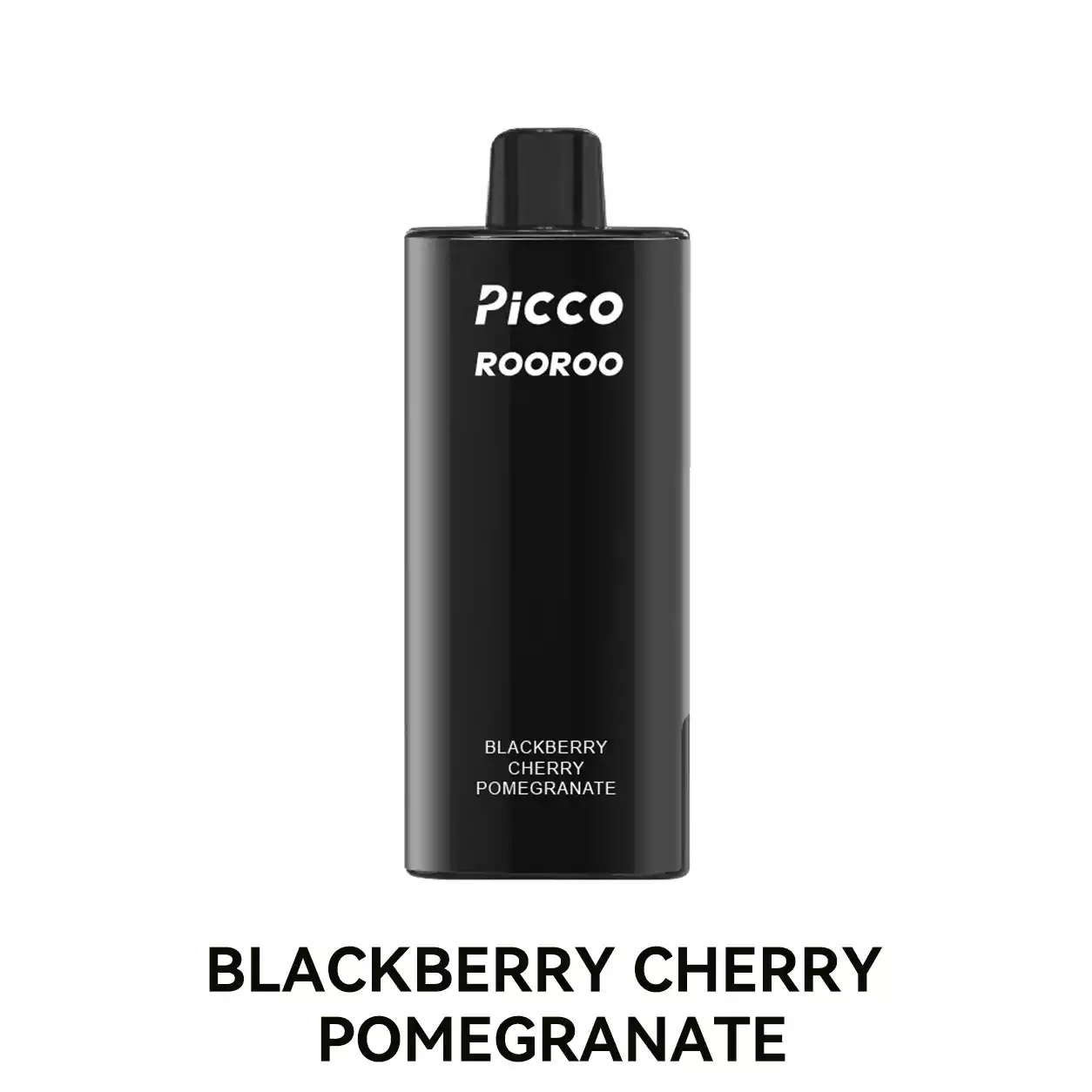

PICOO ROOROO 12000 Puffs Disposable Vape Blackberry Cherry Pomegranate
Three fruits on the label usually means three things happening in the draw. On this option it does not, and the reason is worth understanding before ordering, because it changes what a buyer is actually buying.
The short version is that blackberry and cherry are chemically closer to each other than either is to pomegranate. Two of the three names therefore reinforce rather than contrast, and the third one does its work at the very end of the draw instead of through the middle of it. What looks on paper like a three character blend behaves much more like a two character blend with a finish attached.
There is a second thing worth sorting out at the same time, and it is the one that trips people up. The closing character of this blend is dry rather than sour, and those two sensations get described with the same word all the time. Once they are separated properly the blend makes far more sense, including which of the neighbouring options in this range is the right one to try next.
What This Device Comes With
| Specification | Figure |
|---|---|
| Rating | 12000 puffs |
| Power source | 2500 mAh, charged at the factory, sealed in |
| Screen | Shows charge level and how much fill is left together |
| Shell | Aluminium alloy, 99.96 g without fill |
| Footprint | 40.10 mm wide by 21.40 mm deep by 102.40 mm tall |
| Controls | No selector, no slider, no socket |
| blends | Volume not published for this model |
| Coil | Winding and resistance not published |
| Retail unit | One piece per box |
Three Fruit Names and Only Two Acid Families
Fruit tastes are built from acids, and different fruits lean on different ones. Most of the soft berries, including blackberry, lean heavily on malic acid, which is the same acid that makes an apple tart and gives cider its edge. Cherry sits in the same family. It is malic dominant too, which is why a cherry tastes sharp in a way that reads as clean rather than heavy.
Pomegranate is built differently. Its acid profile is citric, closer to lemon and lime than to apple, and on top of that it carries tannin, the same family of compound found in tea. Tannin is what produces the drying sensation, and it is a completely separate mechanism from acidity even though the two land near each other in time.
So the structure of this blend is not three equal thirds. Blackberry and cherry overlap, because malic acid over malic acid is reinforcement. Pomegranate arrives with a different acid and an entirely different compound alongside it. The blend therefore has a sharp body and a dry finish rather than a three part progression, and anyone expecting three distinct notes will find two.
Blackberry and Cherry Are Closer Than the Label Suggests
It is worth being concrete about how much they overlap. Blackberry fruit is not one note but a cluster of small drupelets, each wrapped in its own outer coat, and the aroma and the acid sit in different places in that structure. Cherry is a single smooth fruit with the nectar held in flesh around a stone. Structurally they have nothing in common.
But chemically, though, the overlap is substantial, and that is what the mouth responds to. Both deliver malic acid as the primary sharp note, which is why a blackberry cherry blend tastes more like one fruit with a companion than like two fruits in conversation. The blackberry brings a darker, more cooked character and the cherry brings a cleaner and brighter version of that same sharpness.
The practical effect is that this is not a blend for someone who wants to pick out three separate fruits in sequence. It is a blend for someone who wants a dark sharp fruit note with real depth behind it. Buyers who enjoy tracking a fruit as it develops from front to back will find the third fruit here is not a development but an ending.
Dry Is Not the Same Word as Sour
This is the part that causes the misreading, and it is worth being precise because the two sensations are genuinely different in origin and in the way they are perceived.
Sourness is an acid, and acid produces a broad tightening across the whole palate. It arrives early in a draw, it is wide rather than focused, and it clears between puffs. Dryness is tannin, and tannin produces a fine roughness on the surfaces of the mouth, particularly the teeth and the gums. It arrives late, it is narrow rather than wide, and it lingers after the fruit has gone.
Sour and dry are not the same sensation
Two different things are being described with one word. Sourness is an acid, and it registers as a broad tightening across the palate. Dryness is tannin, and it registers as a fine roughness on the teeth and gums.
They feel nothing alike and they do not arrive at the same moment. Acid lands early and wide. Tannin lands late and narrow, right at the point where a draw would otherwise just end.
A buyer who tastes a tannic finish and calls it sour will rate a blend far sharper than it is, and then pick the wrong next option.
This matters when judging the blend. Tannin is what makes a red wine feel drying rather than merely sharp, and the same compound in a fruit blend reads the same way. A buyer tasting it for the first time will often describe it as very sharp, when what has actually happened is that a sharp blend has been joined by a drying one. The two sit together in the second half of a draw, which is why they get lumped into a single impression.
The difference is not academic either, because it points at a different next purchase. If the sharpness turns out to be the problem, a brighter single fruit will fix it. If the dryness is the problem, another sweet or chilled option will fix it, and a sharper one will not.
How the Finish Behaves on a Long Draw
Because the tannic part of this blend arrives late, the length of a draw changes the read on it more than it would on a profile that is sharp all the way through.
A short draw lands in the fruit body, where blackberry and cherry are doing the work and the profile reads as a dark, sharp fruit. A long draw gives the finish time to arrive, and the dry character becomes impossible to miss. The same device therefore produces two fairly different impressions depending on how it is used, and a buyer who takes quick puffs may never notice the tannin at all.
There is also a length of ownership to consider. A sealed device rated at 12000 puffs is a long relationship with one blend, and a finish that arrives late is present for much of it. Buyers who dislike a puckering close should know that closing character is not something that fades out early on this device.
A Fixed Blend on a Device With No Settings
This device carries no selector, no airflow adjustment and no power setting, and there is no charging socket on the body either. Nothing about the blend can be dialled in after purchase. The proportions were fixed before the unit reached the shelf, which puts more weight on picking the right blend in the first place.
That is the reason this page spends as long on the chemistry as it does. On a device with adjustments, a buyer can compensate for a blend that is slightly too sharp or slightly too dry by changing how the device behaves. Here the only thing available is the draw, so the blend itself has to be the right choice.
For what it is worth, the hardware removes the two chores that come with owning a large disposable. The cell arrives charged and is sized to carry the full rated puff count, so there is no cable and no topping up partway through. The display reports the remaining fill alongside the charge level, which is the figure that matters on a unit that cannot be recharged. And the aluminium alloy shell at 99.96 g gives it a solid feel in the hand, though at 102.40 mm tall it is a long object to carry around.
How This Triple Fruit Reads Against the Rest of the Line
Within this range there is no dedicated two fruit blackberry and cherry option, so this blend is the only place the pairing appears. The cards below set out what it is closest to, and what a buyer should reach for instead if one of those two qualities is the problem.
| Option | What it is actually built from | Who should pick it |
|---|---|---|
| Blackberry Cherry Pomegranate (this one) | Two overlapping sharp fruits with a dry, tannic finish on top. | A buyer who wants acidity and is prepared for a dry close. |
| Blackberry Ice | One dark fruit with a cold finish instead of a dry one. | For the same fruit note without the puckering finish. |
| Cherry Pomegranate does not exist here | The nearest single sharp fruit in this range is Grape Ice or Mango Monster, both of which are softer and sweeter than this blend. | Useful only as a reminder that this is the sharpest option stocked. |
| Mixed Berries Ice | Several berries, chilled, with no dry finish anywhere in it. | A buyer who wants fruit variety but nothing astringent. |
| Strawberry Raspberry | Two red fruits, sweet, with no acid and no tannin in the finish. | When the brief is soft and sweet rather than sharp. |
Choosing Blackberry Cherry Pomegranate
Is this blend sweet at all?
Barely. Two of the three fruits are sharp rather than sweet, and the third adds a dry close rather than a sugar note. What little sweetness there is comes from the fruit flesh underneath the acidity, and it reads as background rather than as a profile in its own right. If you enjoy sweet profiles this is not one of them.
Why does the label list three fruits if it tastes like two?
Because two of them are chemically close relatives in the way that matters here. Blackberry and cherry are both dominated by malic acid, so when they are layered they reinforce each other rather than sitting side by side. Pomegranate behaves differently, being citric based and carrying tannin as well. The result is a two character blend with a third character attached to the finish.
What does the dry feeling at the end actually mean?
It is tannin rather than acid. Tannin is what produces the fine roughness that makes a finish feel tight and slightly furry on the teeth and gums. It is a different sensation from sourness, which arrives earlier and spreads wider across the palate. Buying this blend expecting sharpness and getting dryness instead is the single most common misreading of it.
Can I make it less sharp or less dry?
Not on this device. There is no selector, no airflow adjustment and no power setting anywhere on the body, so the proportions of the blend are fixed before it reaches you. What you can vary is the draw itself, and a shorter draw will land on the fruit rather than the finish. Beyond that, the choice is between this blend and a different one.
How long does a device like this last?
The cell is fitted at the factory and sized to carry the full rated puff count, so the battery and the fill are intended to finish together and there is no charging point to keep an eye on. The screen shows the remaining fill alongside the charge level, and on a sealed unit the fill figure is the one that tells you when it is finished.
Is it heavy to carry?
It has some weight to it, at 99.96 g without fill in an aluminium alloy shell rather than a plastic one. At 102.40 mm tall it is a long object to keep in a pocket, and anyone ordering several at once will notice the total in the post.
Buy disposable vapes in Australia
The decision worth making carefully is whether the finish is the part that appeals. This option is sharp through the body of the draw and dry at the close, and the second half is the part that either suits a buyer completely or does not suit them at all. Buyers who want dark fruit with depth and do not mind a puckering finish will find this one holds up for a long ownership. Buyers who want fruit sweetness with nothing tightening should look at the two red fruit blends instead, and buyers who only want one dark fruit without the dryness should take the chilled blackberry option.
Why SmokeOZ?
Knowing that two of the three fruits on a label can be doing the same job is the sort of thing that is obvious once explained and impossible to find out from a product photo. Every device here is listed with the hardware it actually has, so a sealed 2500 mAh unit can be weighed against a rechargeable one or one with an airflow slider before any money changes hands.
The brands Australian buyers ask for by name, including IGET, BIMO, ALIBARBAR, PICCO and ARVO, are held in the same catalogue, and each one is described by what it does rather than by how it ranks above something else.
Individuals can order from a single unit upward, with no account to create and no minimum above one piece. Stock sits in Australia and ships from an Australian warehouse, so delivery never leaves the country, and the low pricing is the standing arrangement rather than a limited offer. Keeping an supply chain built up over years is what allows both of those to hold together.
See the PICOO ROOROO 12000 Puffs Blackberry Cherry Pomegranate at SmokeOZ