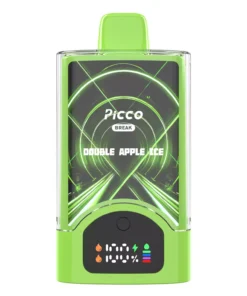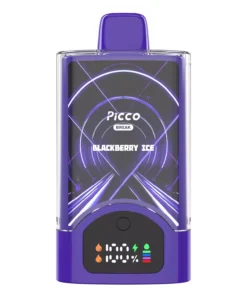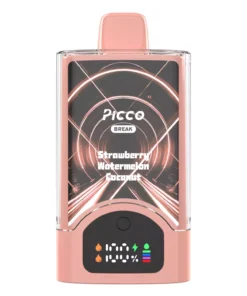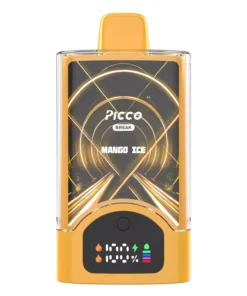

PICCO Break 30000 Puffs Disposable Vape Mint Ice
Mint Ice carries the only name in this range with no fruit in it, and that single fact is worth more to a buyer than it first appears. Fruit tastes are assembled around a set of decisions: which variety, how ripe, how much acidity, and which of two fruits leads. A buyer inherits all of those decisions whether or not they were aware of them.
A mint carries none of them. There is no variety to settle on and no ripeness to aim for, so what remains is a single question, and it is a question about temperature rather than about taste. The sections below set out what that means in practice on a device with a 20 W to 35 W window and a fill this large.
The Hardware Behind This Blend
| Item | Detail |
|---|---|
| Rated draws | 30000 on the lighter mode, roughly 20000 on the other |
| Reservoir | 25 ml filled and closed at the factory |
| Cell | 1300 mAh rechargeable through a Type-C socket |
| Lead needed | Yes, and none is packed in the box with the device |
| Wattage | Settable anywhere from 20 W to 35 W |
| Coil | Quad mesh running between 0.3 and 0.6 ohm |
| Core choice | Ceramic cores in Dual or Quad, three presses to move |
| Readouts | Charge and fill on the one display |
| Weight | Close to 55 g |
| Range | Twenty Profile names, this being the only fruitless one |
The Only Name in This Line With No Fruit in It
Run an eye down the twenty tastes this device carries and the pattern is obvious. Almost every name points at a fruit, a drink or a confection, and most of them name two things at once. This is the single listing that names nothing but a leaf and a temperature.
Everything a Buyer Has to Decide About a Fruit Does Not Apply Here
That absence removes a surprising amount of uncertainty. Ask a buyer what a mango taste will taste like and the honest answer depends on whether the recipe leans green or ripe, whether it carries the acidity of the real fruit or suppresses it, and how much of the sugar has been held back. Ask the same question about a blackberry and the answer swings between a fresh berry and a cooked one. None of those questions exist here.
There is no harvest to interpret and no variety to picture. What the taste tastes like on the first draw is what it tastes like on the last, because there is nothing inside the construction that behaves differently as the device ages. For a buyer who has been caught out by a fruit blend that turned out to be a different reading than expected, that predictability is the selling point.
What Is Left to Decide
Temperature, and how much of it. That is the honest answer, and it is also the reason the second word in the name is doing useful work. A mint on its own is a leaf note. A mint with a cold layer over it is a different product, and a buyer who ordered one while expecting the other would notice immediately.
What a mint leaves out
A fruit taste is assembled around choices. Which variety, how ripe, how much acidity, and which of two fruits leads. Every one of those is decided by whoever builds the recipe.
A mint has none of those variables. There is no variety to pick and no ripeness to aim at, which is why a mint profile is the steadiest kind of taste to specify.
What remains variable is temperature. That is the dial a buyer is actually turning when they order a mint over a fruit.
Why This Line Names Its Chilled Blends
One practical habit worth adopting with this range is reading the name for temperature before reading it for taste. The chilled options here advertise themselves: blackberry, blueberry raspberry, grape, mango, mint, peach and pineapple all carry the word, and the tastes that do not are genuinely unchilled rather than quietly iced.
That matters more on a listing like this one than on a fruit blend, because there is no second ingredient to give a buyer a clue. A two fruit blend usually tells you something about its own balance in the name. A single note tells you nothing except whether cold is in the construction, which makes the name the whole of the information available before ordering.
Which Core Suits a Single Note Profile
The two ceramic cores in this device are usually described as a balance choice, because on a blend they shift which note leads. On a profile with a single note there is nothing to rebalance, so the cores do something else instead. What changes is weight and density: how much vapour arrives per draw, and how solid the impression feels in the mouth.
Dual Ceramic Core keeps the delivery lighter and the note more spare, which suit a buyer who wants the profile to stay clean and sharp-edged from start to finish. Quad Ceramic Core puts more vapour through and gives the same note a fuller, heavier body without changing what it tastes of. Neither is more correct than the other, and on this particular taste the difference is easier to feel than to describe.
Wattage does the same job at a finer scale. The lower half of the range suits the spare reading, the upper half thickens it. Because there is only one note to attend to, a buyer will hear what the adjustment is doing more clearly here than on any blend in the line, which makes this a reasonable taste for working out what a preferred setting actually is.
Twenty Five ml of One Note
A fill this large is a long time with any option, and a single note is the one case where a buyer can be confident about what the second half will be like. There is no balance to drift and no second ingredient to take over, so the taste at the end of the reservoir matches the taste at the start.
The upkeep is the part worth planning for. The fill is sealed in and stays where it is, but the cell will not carry a fill of this size on one charge, so a Type-C lead belongs with the device from the first day rather than being tracked down later. The screen reports charge and remaining fill together, and on this blend the fill figure is the more useful of the two, because there is no taste shift to warn a buyer that the fill is running out.
Where Mint Ice Sits in the PICCO Break 30000 Range
This is the only fruit free option in the line and the only one where the cold is not sitting on top of something else. The cards below set out how it differs from the blends a buyer is likely to be choosing between.
| Taste | How it is built | Who tends to want it |
|---|---|---|
| Mint Ice (this blend) | A single clean note with cold over it and no fruit anywhere in the construction. | A buyer who wants one clear impression rather than a blend. |
| Blackberry Ice | A deep, faintly drying dark fruit given a cold finish instead of sugar. | When the cold should sit over a fruit rather than stand alone. |
| Grape Ice | A sweet full grape brought into line by a chill across an unusually large fill. | If the fruit should be sweet and the cold moderate. |
| Pink Lemon | A citrus mix that holds its sourness the whole way down a draw. | When the brightness should come from acid rather than from cold. |
| Peach Ice | A gentle stone fruit finished cold, considerably softer than this one. | If the profile should be mild and sweet rather than clean. |
Questions About the PICCO Break 30000 Mint Ice
What does this one actually taste of?
One clean note and the cold around it. There is no fruit, no cream and no dessert layer anywhere in the construction, so nothing competes with the mint or shares the space with it. Buyers who like a profile they can identify in a single puff tend to get on with it well.
Is it sweet?
Not in the way a fruit blend is. The impression leans clean and cool rather than sugary, and the finish clears instead of coating. Anyone who has found sweet blends appealing at first and then tiring after a few thousand draws is usually looking for exactly this kind of profile.
How cold does it run?
Cold enough that it is the cooling rather than the leaf character a buyer notices first, which is what the second word in the name is there to signal. This line names its chilled blends rather than leaving a buyer to discover the temperature after ordering, so the label is doing real work here.
Which setting should it run on?
Dual Ceramic Core at the lower end of the wattage range to begin. A profile built on a single note has nothing else to hide behind, so whatever the setting does to it is plainly audible. Starting low and moving up one step at a time is the only reliable way to find the point that suits.
What is different about running a mint on this device?
The recharge is the main thing, since a 25 ml fill outlasts a 1300 mAh cell and a Type-C lead has to be on hand to finish it. The screen also matters more here than on a fruit blend, because there is no fruit turning faint to warn that the fill is nearly done. The reservoir readout is the only signal.
Buy disposable vapes in Australia
The case for this one is simplicity. No fruit means no variety, no ripeness and no acidity to weigh up, so the only thing a buyer is choosing is how much cold they want and whether the profile should read spare or full. Buyers who arrive at a mint because they are tired of sweet blends tend to stay with it, and the lighter core at the lower half of the wattage range is where it does that job most clearly.
Why SmokeOZ?
A mint is the easiest kind of taste to get wrong quietly, because there is no fruit in it to cover a rough edge, and a listing that only repeats the Profile name leaves a buyer nothing to go on.
This catalogue describes each device by its construction, so a single clean note, a chilled fruit and a two fruit blend can be lined up against each other before anything is ordered. The brands most often searched for, IGET, BIMO, ALIBARBAR, PICCO and ARVO, are all kept together here.
One unit is a normal order. No business details are required and no minimum sits above a single device. Devices are held locally and posted from an Australian warehouse, so delivery stays inside the country, and the low pricing is the everyday position rather than a temporary one. Both rest on a supply chain that is already in place.