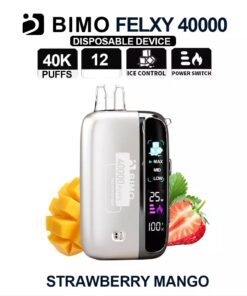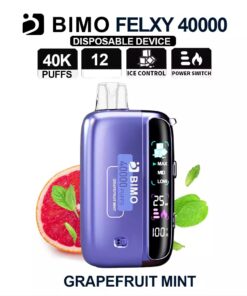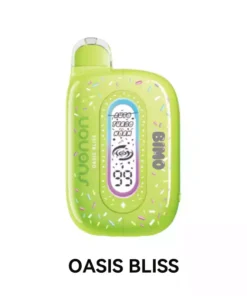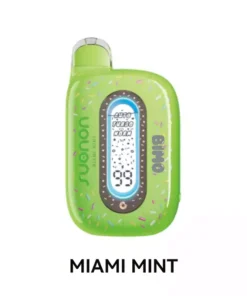
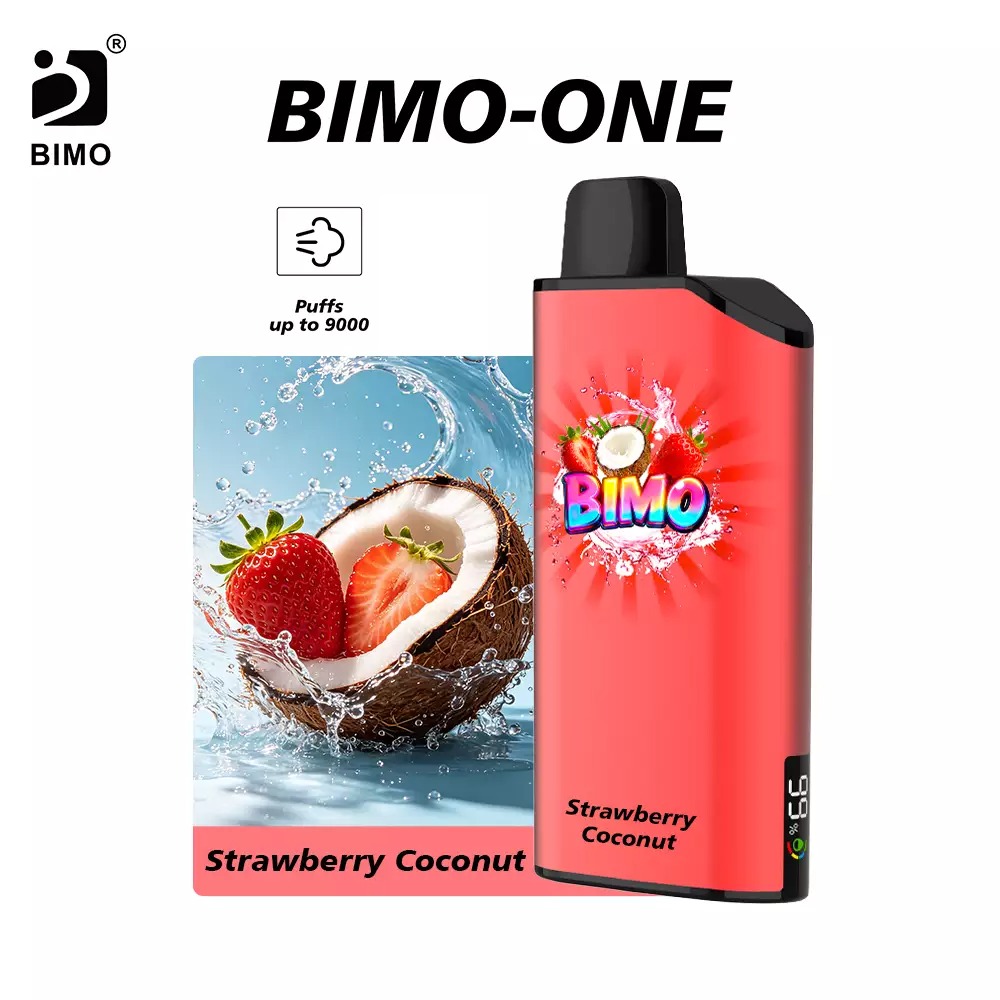

BIMO ONE 9000 Puffs Strawberry Coconut Disposable Vape Australia
The name reads like two fruits sitting side by side, and that is worth correcting before you order. Strawberry and coconut almost never arrive together as a pair of fruits. They arrive as a fruit and a cream, which is how the combination entered the language in the first place, and the pairing is old enough that most people read it as a single taste rather than two ingredients. That is the shape of this blend. One half is a fruit, the other half is the thing the fruit is served with, and knowing which half is which tells you most of what you need to know about how it tastes.
The BIMO ONE 9000 Strawberry Coconut is a non-rechargeable disposable rated at up to 9000 puffs, with a sealed 22ml fill, a built-in 2500mAh battery, a 1.0 ohm coil and an integrated digital screen, and it is one of 17 options in this range. The strawberry is the subject of the taste and the coconut is the layer sitting under it, and there is no cooling added. What follows is what the creamy half of a cream taste is actually built from, and the three practical things that come out of it.
Why there is no cream in a cream taste
Start with what cream is. The body of coconut cream, the part that separates out and makes it a dessert ingredient rather than a drink, is fat. That is not a minor detail. It is the entire reason coconut cream tastes rich while coconut water, which comes out of the same nut, tastes light, faintly salty-sweet and close to watery. The sweetness in the two is similar. What changes is how much fat is standing in the middle of it.
Now look at what is inside a sealed disposable. A fill is propylene glycol, vegetable glycerine, taste compounds and, in some builds, a cooling agent. Nothing on that list is a fat, and nothing on that list behaves like one. A taste cannot put the richness of coconut cream into a fill, because the thing that creates that richness is not something that survives the trip.
So the creamy half of this blend is rebuilt as an impression rather than supplied as an ingredient. It is assembled from a family of aroma compounds, the same roundness family that gives peach, apricot and butter their softness, with a small amount of vanilla alongside them. Those compounds read as creamy because of everything you have eaten next to them over a lifetime, not because anything creamy is present in the vapour. That is not a compromise for a disposable to be embarrassed about. It is simply a different mechanism, and it produces a noticeably different result.
Fat is doing three separate jobs in a bowl of strawberries with coconut cream on top, and it is worth separating them, because vapour can perform none of the three and still deliver something you will read as cream.
| What the fat does | In the dessert | In the vapour |
|---|---|---|
| Carries the aroma | Many of the compounds behind coconut’s smell dissolve in fat, and the fat holds them and lets them go slowly, so the smell keeps arriving the whole time the cream is in your mouth. | The fill carries the same compounds directly and releases them as the fill heats, so the creamy note arrives in one movement rather than being held back and released in stages. |
| Coats the mouth | A film of fat settles on the tongue and the inside of the mouth. That film is what you actually feel as weight, and it is why cream feels substantial. | There is no film, because there is nothing in the vapour that can leave one. The creamy impression arrives as a smell and leaves with the exhale, which is why it does not feel heavy. |
| Softens the fruit’s acid | Fat blunts sharpness. Cream poured over an acidic fruit is not a garnish, it is a buffer, and it is the reason the combination works at all. | Nothing blunts the acid, so the strawberry’s sharpness arrives at full strength and the cream note sits behind it rather than over it. |
The third row is the one that defines this particular blend. In the dessert, cream covers the strawberries and takes the edge off them. In a fill, it cannot. What you get instead is the arrangement reversed: the sharpness stays at the front where it started, and the softness lands after it.
Three things that follow from a cream with no fat in it
The creamy half registers after the fruit, not as weight in the mouth
Because nothing is coating anything, the coconut does not show up as body in the way cream does when you eat it. It shows up as a softness in the second half of a draw, after the strawberry has already made its point. This is the single most useful thing to know before you order, because it is also the thing buyers most often misread. Anyone who judges a cream taste by how full the vapour feels in their mouth will taste a strawberry taste with something faint sitting behind it and decide the coconut was underdone. The coconut is not underdone. It is in the only place it can be, and you will find it by paying attention to where the draw goes rather than how dense it feels.
The taste does not get heavier as you work through the fill
A spoonful of cream leaves something behind. It follows you into the next mouthful and the one after that, which is why a rich dessert turns tiring well before it is finished. An aroma has nothing to cling to, so nothing carries over from one draw to the next. The weight of the draw in the last part of the 22ml is the same as it was in the first, and the taste stays the same size the whole way through.
On a sealed device holding this much fill, that is a genuinely useful property. It means the decision you are making is about a constant rather than about an arc. There is no point in the fill where a creamy taste quietly turns into too much, and no point where it thins out into nothing. If the first session suits you, so will the last one.
The strawberry is doing structural work rather than supplying a fruit note
Strawberries are among the more acidic fruits, carrying citric and malic acid together, and that is precisely why they work in a cream setting. Sharpness is what stops a cream from going flat, and a fruit that was purely sweet with no edge would leave the blend with nothing to hold the soft half up. This pairing did not become common because the two tastes are pleasant next to each other. It became common because the acid in the fruit keeps the cream in position.
Inside a single draw you can follow that arrangement at work. The opening is bright and slightly sharp, and the closing part is soft and rounded. It is not one steady taste from beginning to end, and a buyer expecting an even blended sweetness across the whole draw will read the change as inconsistency rather than as structure. Knowing which of the two it is changes how satisfied you are with the device, which is worth more than it sounds.
Coconut is two tastes sharing one word
Coconut is one of the vaguest words on a Profile list, because it covers two things that lead in opposite directions. There is fresh coconut, meaning the flesh and the water: light, faintly saline, mildly sweet, with very little of what anyone would call cream. And there is the coconut of desserts and confectionery: soft, sweet, rounded, with the rich note standing in front of everything else. Both are honestly called coconut, and a build on the first is a different product from a build on the second.
The gap between them is not a matter of strength. Fresh coconut next to a fruit makes the blend crisper and pushes it towards tasting like produce. Creamy coconut next to the same fruit makes it rounder and pulls the whole thing towards dessert. Turning up a fresh coconut build gets you more of a light, slightly watery coconut. Turning up a creamy one gets you less fruit and more sweetness. The two directions never converge.
Which means the question worth asking about any coconut blend is not how much coconut is in it. It is which coconut is in it, and that is the question a Profile name usually leaves open.
| Fresh coconut | Creamy coconut | |
|---|---|---|
| What it tastes like | Light, faintly saline, mildly sweet, closer to coconut water than to a dessert | Soft, sweet and rounded, with the rich note in front of the fruit |
| What it does beside a fruit | Sharpens the blend and keeps it close to produce, the way it behaves in tropical fruit mixes | Softens the fruit and moves the blend towards dessert, the way it behaves with custard or toffee |
| How it behaves in a draw | Reads fresher and slightly sharper towards the end of the draw | Reads rounder towards the end of the draw, holding the same weight throughout |
| Where you usually meet it | Coconut in tropical fruit names, generally listed after pineapple, melon or kiwi | Coconut in dessert names, generally sitting beside cream, custard, toffee or milk |
This listing sits on the creamy side, and the name itself is the evidence rather than the word coconut. When a blend is built with the fruit in charge and the coconut laid underneath, the fruit is named first: strawberry, then coconut. A build where coconut led the taste would be named the other way round. At the same time, there is no dessert word anywhere in this name, no custard, no toffee, no cream, and that absence is informative too. It tells you the coconut has been kept as the layer rather than promoted to the subject, which is exactly what a fruit-and-cream pairing is supposed to do.
What to expect in your first session
There is one practical point to carry into the first session, and it is about your own attention rather than about the fill. Of the two halves of this blend, the coconut is the soft one, and soft steady notes are the ones attention lets go of first. The opening draw of a session is therefore the clearest reading of the ratio you actually bought, and by the fifth or sixth draw the strawberry will have taken over your impression of the taste. Nothing in the device changes between those two draws. What changes is the proportion of it you notice, and that is a normal way for a quiet note to behave rather than a sign that the taste is thinning out.
If you want the coconut to come forward, let the draw run a moment longer rather than cutting it short. The soft half lives in the second part of the draw, after the opening sharpness has passed, and a short quick draw mostly catches the strawberry. That is also the quickest way to work out which of the two coconuts you ended up with, since a fresh coconut build gets sharper towards the end of a draw while a creamy one gets rounder.
Two more things worth knowing before you order. There is no cold in this one, so the lift at the front comes from the fruit’s own acidity rather than from anything added to chill it. And if the creamy direction is what you are really after rather than the strawberry, this is not the clearest example of it in the catalogue. A coconut laid over a sharper fruit shows the cream note far more plainly, and a dessert direction with a cold finish goes deeper into richness than a fruit-and-cream blend can. This one is a fruit taste with a soft back half, and it is best judged as that.
Strawberry Coconut specifications on the BIMO ONE 9000
| Puff rating | Up to 9000 puffs |
| Taste | Strawberry with a soft creamy coconut layer underneath, no cooling added |
| Capacity | 22ml sealed, pre-filled |
| Battery | Built-in 2500mAh, non-rechargeable |
| Coil | 1.0 ohm |
| Display | Integrated digital screen showing battery level and remaining capacity |
| Activation | Draw activated, no buttons |
| Range | One of 17 options in the BIMO ONE 9000 line |
Strawberry Coconut questions buyers ask
Does it taste like two fruits put together?
Not really, and that is the point. The strawberry is the fruit and the coconut is acting as the cream next to it, so what you are tasting is one fruit with a soft layer under it. If you go in expecting a fruit salad taste you will find the blend quieter than you pictured. If you go in expecting strawberries with something creamy behind them, it lands where you expect.
Is the coconut creamy, or is it like fresh coconut?
It is the creamy one, but kept deliberately in check. There is no custard or toffee word in the name, which means the coconut has been left as the layer under the fruit rather than built up as the main idea. Expect softness rather than a dessert. If you want coconut pushed all the way to the front, a dessert direction will get you closer.
Is it an iced taste?
No. Nothing in this name points to a chilled build and nothing cold was added to it. The lift you feel at the front is the acidity of the strawberry rather than a cooling layer, which is also why the second half of the draw settles into something soft instead of staying sharp.
Why does the coconut seem to fade after a few draws?
Because it is the quiet half of the blend and the quiet half is what attention releases first. The fill has not changed and the device has not changed. The opening draw of a session is the honest reading of the mix. If you want more coconut in a particular draw, let the draw run longer instead of drawing quickly, since the creamy note sits in the second part.
Do I need to charge or refill it?
Neither. The battery is built in and the body is sealed, so there is no port on it and no way to top it up. The digital screen shows battery level and how much capacity is left, which is the practical way to know where you are through the fill rather than guessing from the taste.
Buy disposable vapes in Australia
Strawberry Coconut on the BIMO ONE 9000 is a fruit taste with a cream behind it, and the useful thing to understand about it is that the cream cannot behave the way cream behaves in food. There is no fat in a sealed fill, so the coconut half is built from aroma instead of from richness, and that single fact explains where the taste sits in a draw, why it keeps the same weight from the first session to the last, and why the strawberry’s acidity is doing structural work rather than just adding a fruit note. SmokeOZ sets out which of the two coconuts a blend is using rather than leaving it to the name, and keeps the device detail beside it, including the puff rating, the sealed capacity, the battery, the coil and the screen. BIMO, IGET, ALIBARBAR, PICCO and ARVO are grouped in one catalogue so the creamy directions across the range can be compared side by side, one device is a normal order with no minimum, and the price shown is the price paid.
Why SmokeOZ?
Creamy tastes are the ones buyers get wrong most often, because a name that says coconut does not say whether the coconut was built as a fruit or as a cream, and the two go in opposite directions. Listings here say which one it is and where in the draw it shows up, so a soft blend can be judged before it is bought instead of after. Stock is held in an Australian warehouse and shipped domestically, a single device is a normal order with no minimum, and the specification sits on the same page as the price.