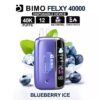

BIMO Felxy 40000 Puffs Apple Aloe Disposable Vape Australia
The name reads like an apple with something gentle and cooling underneath it, and that is the wrong picture to buy against. Apple Aloe on the BIMO Felxy 40000 is a crisp, tart apple sitting on a thin, plant-like green note with a dry bitter edge behind it. That is a sharper and less sweet combination than the name suggests, and it is the reason this profile behaves differently from most of the fruit in the range.
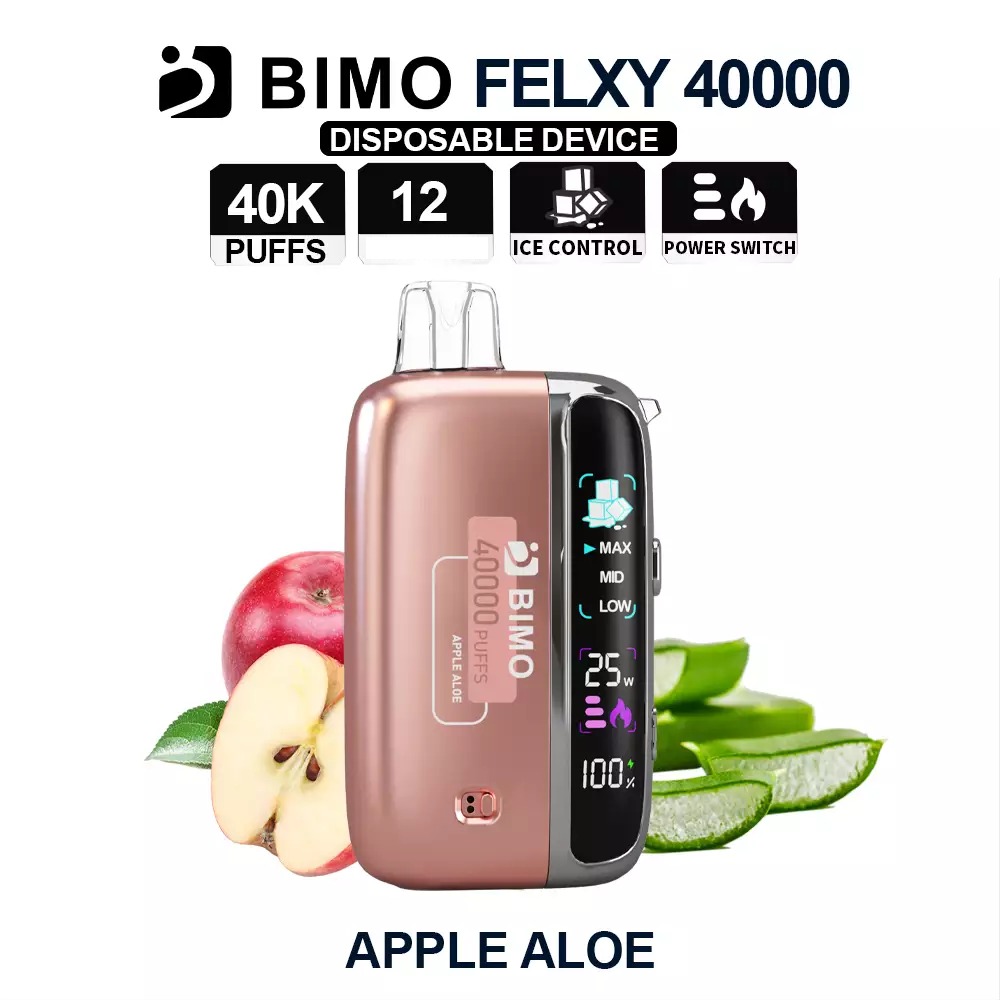
Two things are worth knowing before anything else. First, this is not a sealed one-piece disposable. The Felxy 40000 platform is built around a rechargeable battery base that accepts magnetic pre-filled pods, so it takes a Type-C charging cable in a way a sealed disposable never does. Second, the pods and the base are sold as separate listings. This particular listing is the Kit, which is the base plus one Apple Aloe pod, and a pod bought on its own will not power up without the base from a Kit. That single fact is the difference between a working device and an expensive piece of shelf, so it is worth reading before you order rather than after.
Here is what the profile is actually doing, why the power dial changes the apple rather than just making it stronger, and how to set the two controls if you want to taste the aloe half rather than the apple half.
The aloe in the name is not the gel
Almost everyone pictures aloe as the clear, slippery stuff inside a leaf. That part of the plant is very nearly tasteless. It is mostly water and long-chain polysaccharides, which is why it has no taste of its own and is used in drinks as a texture rather than as a taste. If a vape taste were built from the gel alone, it would have nothing to say.
The part your nose actually recognises as aloe lives a layer deeper. Just under the outer green layer of the leaf runs a yellow latex, and that latex is where the plant keeps aloin, a class of bitter compounds the plant produces to discourage anything from eating it. The bitterness is not a side effect. It is the plant’s whole defence, and the yellow sap is concentrated enough to be unpleasantly bitter on its own. When a leaf is cut carelessly, that sap runs across the clear gel and ruins it, which is the reason food-grade processing drains the leaf standing up before it is filleted.
Commercial aloe drinks push this further than you would expect. Because the aloin is the problem and not the taste, drink manufacturers run the extract through activated carbon to strip the bitterness out to a very low level. The result is a drink most people happily identify as aloe on the strength of colour, clarity and a faint green herbal note rather than on strength of taste. In other words, the version of aloe you have drunk before is itself a reconstruction, built from what was left after the loudest part was taken away.
That matters here because there is no gel and no polysaccharide in a vape fill. A fill is vegetable glycerine, propylene glycol and aroma compounds, and none of that can carry the slippery texture that makes an aloe drink feel like aloe. What a taste can carry is the other half of the plant: a green, faintly herbal, slightly grassy note and a small amount of the bitter edge that survives without the gel. So expect Apple Aloe to read as a dry, green, plant-like finish under a sharp apple, and not as a smooth, soothing, almost creamy drink. That second impression is the one that catches people out, and it comes from the drink, not from the profile.
The second half of this blend is bitter, not creamy
Most fruit blends that add a second note add sugar, cream or another fruit. This one adds a bitter green note, which puts Apple Aloe in a much smaller category. Sweetness and bitterness do not sit at the same moment. Sweetness arrives on the inhale and leaves quickly. Bitter notes are slower to arrive and considerably slower to leave, because they are built on compounds that stay put. The practical result is that the apple is what you notice first and the green bitterness is what you are still noticing ten minutes later.
That gives the profile a structure worth knowing. It does not build up into a sweet finish the way a dessert direction does. It builds into a dry one. The finish reads as clean and slightly grassy rather than rounded, and the dryness is doing real work: it is what stops the apple from becoming a flat, syrupy apple note. Remove the bitter-green half and you are left with something that is basically apple nectar concentrate, which is exactly what a lot of sweet fruit tastes taste like once you have had something with a dry edge to compare them against.
There is a second thing the bitterness does, which is easier to miss. The apple in this blend is a sharp, high-acid apple rather than a soft baked one, so the blend has a lot of front-end tartness and a small amount of dry weight behind it. The dry note is what keeps that tartness from being the only thing you taste. It is doing structural work in the same way that acidity does structural work in a fruit blend that has cream in it, just from the opposite direction.
Apple has two temperatures and the power dial chooses between them
This is the single most useful thing about the Felxy 40000 platform if you buy an apple profile, and it applies to the hardware rather than to the taste company.
Fresh apple and cooked apple are not one option at two strengths. They are two different sets of compounds. Fresh apple is built almost entirely on a small group of esters, with one of them doing most of the identifying for red-fleshed varieties, and a separate green aldehyde line supplying the peel and cut-grass edge that reads as tartness. None of that needs heat to exist. Cooked apple is something else again: the caramelised, jam-like, almost savoury note that people recognise from apple sauce or a warm slice comes from compounds that only form when heat breaks sugar down. Those are thermal products. They are not in the fruit until you cook it.
The Felxy runs a 1.1 ohm dual mesh coil and offers three power settings at 15W, 20W and 25W. Those three settings are the closest thing this device has to a heat control, and on an apple profile they act like one. That is unusual. On most fruit tastes, moving up a power level means more vapour and more intensity, and the taste sits still. On Apple Aloe, the higher settings push the coil harder and the ester-led fresh apple starts to give way to the heavier, cooked register. Turn it up and you should not expect a louder apple. Expect a different apple.
What 15W does to Apple Aloe
At the lowest setting the coil runs cooler and the fresh esters stay in charge. The apple reads as a raw, sharp, almost green apple, the tartness arrives early, and the bitter-green note underneath stays clearly separate from it. The vapour is thinner and less dense than at the top setting, so if you like a tighter, more restrained draw, this is the setting that gives it to you. For anyone who actually wants to taste the aloe half, 15W is the honest place to start, because the two notes are furthest apart here.
What 25W does to Apple Aloe
At the top setting you get more vapour and a warmer coil, and the profile leans noticeably towards the cooked end. The apple gets rounder, softer and a little heavier, with a jam-like quality that starts to edge towards apple sauce or a warm baked note, and the sharper green edge that defined the fruit at 15W gets buried. The bitter-green note does not disappear, but it stops being the thing you notice first. This is a genuinely different taste rather than a bigger version of the same one, and it is the reason the setting exists on this device rather than being a gimmick. It is also the reason a 25W apple is not automatically the better apple. It is a different preference.
The middle setting at 20W sits between the two, which makes it the sensible starting point if you have not decided which apple you want. Once you have an idea, move to one end and come back. The useful comparison is not low against high in the abstract. It is the two apples side by side, in the same session, on the same pod.
Why the ice control behaves differently on this profile
The Felxy has a four-level ice control running from ZERO through LOW and REGULAR to FROZEN, and it works on every profile on the platform rather than being built into the fill. That is a meaningful difference from a sealed disposable, where cooling is a fixed property of the taste and you either like it or you do not. Here it is a setting, and on Apple Aloe it does something quite specific.
Cooling agents work on perception rather than on temperature. The two effects that matter here are that added cool reads as extra freshness and that it raises how sweet something tastes while flattening how bitter it tastes. Both of those pull in the same direction on this particular blend, and they pull against the half of the profile you are trying to hear.
So the progression reads roughly like this. At ZERO you get the whole construction: sharp apple in front, green plant note and dry bitter edge behind. At LOW the apple lifts and brightens and the bitterness starts to sit further back. At REGULAR the profile is cleaner and sweeter and noticeably more fruit-forward, and the aloe half is becoming harder to pick out. At FROZEN the apple is what is left, and the bitterness that made this blend worth buying has largely been sanded away.
If you ordered Apple Aloe expecting to taste the aloe, keep the ice low. If you want it as a clean, sweet, cold apple, turn it up. The control gives you both, and the useful thing is knowing which one you are asking for, because the same setting that makes the fruit better is the one that makes the botanical worse.
One more note on airflow, which is adjustable at the base on this device. Because the apple carries the front of the draw and the green note sits behind it, a tighter draw tends to keep the balance on the fruit, while a more open draw spreads the profile out and gives the dry, grassy finish a bit more room to register. If you are trying to hear the aloe half, open the airflow slightly and take a slightly longer draw rather than trying to solve it with the ice control.
Buying the Kit rather than a Pod
This is the practical part that matters most on this particular platform, so it is worth being blunt about it. A BIMO Felxy 40000 Pod contains the pre-filled reservoir and the coil assembly. It contains no battery, and it will not run on its own. The rechargeable base, with its two cells, its Type-C port, the screen and the physical on-off control, comes in the Kit. If you order a pod without owning a base you will have nothing to put it in.
That also changes how the platform is best owned. Once you have a base, the ongoing cost of the range is the pods, and the base is a one-time purchase. On this site the Kit is listed at 60 and a standalone pod at 50, so the base effectively costs a small step above a single pod. If you only want one option, the Kit is the only thing that works. If you already own a base, or if you are planning to move through several tastes, buying pods individually from here on is the cheaper path and you can pick the next one without buying the hardware again.
There is one more practical consequence of the pod architecture that is easy to miss. Because the pod is the part that empties and the base is the part that does not, a finished pod is the only thing you discard. The battery, the electronics and the controls stay in your hand and go into the next pod. If you are weighing this platform against a sealed disposable on what gets thrown away, that is where the difference shows up, and it is the main reason people buy a pod platform in the first place.
Where Apple Aloe sits against the rest of this range
The Felxy range covers fifteen profiles and they are not variations on a theme. Some are built on ice, some on fruit sweetness, some on a creamy base, and one or two on a dry or bitter finish. Apple Aloe belongs to the smaller group, and if you are choosing between tastes rather than replacing a pod, this is where it stands.
Two further comparisons are worth making explicitly. Against a sweet fruit profile, Apple Aloe is the opposite choice: if you are tired of sweetness, the dry finish here is the whole point. Against a mint or ice-led profile, this is not that at all, because the green note here is grassy and slightly bitter rather than cold and clean. If you are hoping for a cooling finish, use the ice control rather than expecting the taste to supply one.
Apple Aloe specifications on the BIMO Felxy 40000
A note on the puff rating, because it is quoted more loosely than it deserves. The up to 40,000 figure describes the platform, not the pod in your hand, so it should be read as a statement about the system rather than a number of draws from one fill. Your pod lasts as long as your draw length and your power setting allow, and a 25W session with long draws runs through the fill considerably faster than a 15W session with short ones. Read it as a comparison against other platforms rather than a countdown.
How to get the most out of the two dials
Start on 20W with the ice at ZERO
That combination puts the whole profile in front of you with nothing masking it. Twenty watts is warm enough to give you a full-tasting apple without tipping it towards the cooked register, and ZERO ice is the only setting that leaves the bitter-green finish audible. Judge the taste here first, because everything else you change is a change to this balance rather than a fix for a problem with it.
Drop to 15W when you want the aloe half to be the point
The cooler running keeps the fresh apple esters in charge and leaves the most space between the fruit and the green note behind it. This is the setting to sit on if you bought this profile for the botanical side and found the apple doing most of the talking at 20W.
Go to 25W when you want a warmer, rounder apple
Expect the sharper green edge to be buried and the fruit to take on a cooked, almost jam-like quality. It is a legitimate second opinion on the same pod rather than a mistake, and it is worth tasting the same taste at both ends before deciding which one you actually prefer.
Keep the ice low on this profile unless a cold apple is what you wanted
The control will happily take you to a clean, cold, sweeter apple, and it does it well. But the same cooling that brightens the fruit is what flattens the bitterness, so the aloe fades before the apple does. Decide which of those two you are chasing before you turn it up rather than after.
Wipe the magnetic contacts when you change pods
The base and the pod meet at a magnetic interface, and a film of residue on that contact is the most common reason a fresh pod can feel like it is not connecting properly. A dry wipe on both surfaces before you fit a new pod takes a second and avoids the most annoying fault on this platform.
Apple Aloe questions buyers ask
Is Apple Aloe a sweet taste?
Not especially. The apple side is a sharp, tart fruit rather than a soft baked one, and the second half is a dry, faintly bitter green note rather than anything creamy or sugary. If you enjoy sweet fruit profiles, expect this one to be a different register rather than a different brand of the same thing.
Does it taste like an aloe drink?
Less than you might expect. A vape fill cannot carry the slippery gel texture that makes an aloe drink feel like one, and the bitterness that identifies the plant has to be recreated as aroma instead. Expect a dry, green, slightly grassy finish under a crisp apple. It reads as a botanical fruit profile, not as a beverage.
Is this option iced?
Nothing in the name indicates cooling and none is built into the fill. What makes this platform different is that the ice control is a dial, so you can add cold yourself in four steps. On this profile the useful range is the lower end, because the cooling flattens the bitter-green finish along with the heat.
Which power setting suits this option?
All three, because they are three different apples. Fifteen watts gives you a raw, sharp apple with the green note clearly separated. Twenty-five watts gives you a warmer, rounder, almost cooked apple with the sharp edge buried. Twenty is the sensible middle if you have not decided yet, and the honest way to choose is to taste the same pod at both ends of the range.
Do I need to charge it, and can I refill it?
You need a Type-C cable and you never open anything. The base is rechargeable and the pod is pre-filled, so there is no filling step and no coil to change. Once a pod is finished you pull it off magnetically, drop a new one in and put the base straight back on your charge.
Can I buy just the pod?
You can, and pods cost less than a Kit, but a pod alone will not run. The battery, the controls and the screen live in the base that comes with the Kit, so a pod is only useful if you already own one. If this is your first purchase on the platform, take the Kit.
How long does one pod last?
That depends on you rather than on the label. The 40,000 puff figure belongs to the platform, not to a single 26 ml pod, and a pod runs down faster on 25W with long draws than on 15W with short ones. The screen shows battery and wattage rather than remaining fill, so the honest measure is the Profile: when the green finish fades and the apple starts to feel thin, you are near the end of it.
Buy disposable vapes in Australia
Apple Aloe on the Felxy 40000 is the kind of profile where the hardware detail is genuinely part of the taste, which is why this page spends as long on the two dials as on the taste itself. The apple has a raw register and a cooked register, the power setting moves you between them, and the same cooling that brightens the fruit is what removes the bitter-green finish behind it. Knowing that in advance is the difference between buying a sharper-than-expected taste by mistake and choosing it on purpose. Listings here set out which control changes which part of the profile, whether cooling is built in or dialled in, and whether the item you are looking at includes the hardware you need to actually use it. BIMO, IGET, ALIBARBAR, PICCO and ARVO all sit in one catalogue so profiles across different device types can be compared side by side, the stock is held and shipped inside Australia, and a single unit is a normal order with no minimum.
Why SmokeOZ?
Devices that work differently are the ones that get mis-sold, and most of the mistakes on this kind of platform are about what is in the box rather than about what is in the pod. Every listing here states whether you are looking at a base plus a pod or the pod on its own, whether the cooling is part of the fill or something you control, and what each setting on the device actually changes about the profile. That way the taste you end up with is the one you picked. Stock is held in an Australian warehouse and sent out from there, one device is a normal order with no minimum order quantity, and the full specification sits on the same page as the price.